
4 Times Chauffeurs Beat Taxis for Airport and Exec Travel

A chauffeur is a pre-booked, service-led driver assigned to a specific vehicle and journey; a taxi is on-demand, metered transport you hail, rank or app-book. For airport transfers, executive meetings or anything where a delay would cost you, the chauffeur model wins on predictability. For a short, low-stakes hop across town, a taxi is usually quicker to arrange and cheaper.
TL;DR:
- Chauffeur services offer fixed, pre-booked arrangements with higher vehicle standards, personalized greeting, and specialized training, unlike on-demand taxis with variable quality.
- Taxis depend on availability and fluctuating fares, including surge pricing, and lack guaranteed services like flight tracking or waiting periods, making them riskier during delays.
- For airport transfers or high-stakes meetings, reserving a chauffeur ensures reliability, fixed pricing, and professionalism, especially when delays could be costly or stressful.
- Comparing costs fairly requires asking about fixed quotes, included services, cancellation policies, and driver checks, rather than just considering initial prices.
- Companies like Airport Lift UK provide fixed-price airport transfers with flight tracking, driver vetting, and meet-and-greet services, making them a dependable choice for time-sensitive travel.
Table of Contents
- What is a chauffeur?
- What is a taxi driver?
- Key differences explained: service, vehicle, training and pricing
- When each option makes sense
- Pricing and value: how to compare costs fairly
- Airport transfers: what chauffeurs offer that taxis usually don’t
- How to choose: checklist and questions to ask before you book
- Publisher perspective: how a fixed price airport transfer service approaches this choice
- Practical takeaways from an executive travel point of view
- How Airport Lift UK removes the guesswork
- Sources
- FAQ
What is a chauffeur?
A chauffeur service works on reservation, not availability. You book in advance, and the operator assigns a specific driver and vehicle to your journey, rather than whichever car happens to be nearest. That single distinction shapes everything else about the experience, from presentation to punctuality.
Vehicle standards tend to sit well above the taxi average, and most reputable operators build in extras that a standard taxi simply doesn’t offer.
- A named driver and vehicle confirmed ahead of travel, not assigned on the day
- Luggage assistance and meet-and-greet at arrivals, rather than a kerbside pickup
- Driver vetting, professional etiquette and discretion as standard expectations, not add-ons
Hadley Executive’s comparison frames this as the core divide between the two models: one is built around service, the other around availability.
What is a taxi driver?
A taxi is transport you can get right now, not transport you plan ahead. You hail one on the street, book through an app, or pick one up from a rank, and a car arrives from whichever driver is nearest.
Fares run on the meter, which means the price isn’t fixed until the journey ends. That’s fine for a five-minute trip. It’s less fine when demand spikes and a surge multiplier kicks in on top of the metered rate.
- Availability depends on location and time of day, not a confirmed booking
- Fares are metered, with potential surge pricing during high demand
- Licensing standards are consistent, but vehicle condition and driver presentation vary by operator
Borjan’s operator blog puts it plainly: taxis focus on getting you from A to B, while chauffeurs focus on the journey itself.
Key differences explained: service, vehicle, training and pricing
The chauffeur vs taxi decision usually comes down to five practical differences, and each one has a direct effect on cost, comfort or reliability.
Service and personalisation. A chauffeur greets you by name, adjusts to your itinerary, and often handles multiple stops without renegotiating the fare. A taxi driver takes you where you ask and moves on to the next fare.

Vehicle quality. Chauffeur fleets typically run executive saloons or premium people carriers, valeted and presented for the job. Taxi vehicles meet licensing standards but range widely in age, cleanliness and comfort.
Training and vetting. Both models require licensing, but chauffeur operators commonly layer on additional checks: DBS screening, defensive driving assessments, and etiquette training. Ask any provider directly for proof of these checks before booking a high-consequence journey.
Pricing models. Chauffeurs quote fixed prices or hourly hire rates agreed before you travel. Taxis meter the fare as you go, which leaves the final cost open to traffic, detours and surge pricing.
Reliability features. Flight tracking, an agreed waiting policy and a clear process for handling delays are standard with most chauffeur services. Taxis rarely offer any of this. If your flight lands late, a metered taxi has no obligation to wait or adjust.
- Personalisation: itinerary-led vs point-to-point
- Vehicle: executive fleet vs standard licensed vehicle
- Vetting: DBS checks and training vs baseline licensing
- Pricing: fixed quote vs metered fare with possible surge
- Reliability: flight tracking and waiting allowance vs no such guarantee
Pro Tip: When comparing chauffeur services vs taxis, ask each supplier what happens if your flight lands 40 minutes late. The answer tells you more about the service than the price does.
When each option makes sense
The right choice depends on how much a delay or mix-up would actually cost you.
- Short, last-minute, low-consequence trips — a quick cross-town journey where timing isn’t critical suits a taxi vs private driver comparison in the taxi’s favour: faster to hail, no booking needed.
- Airport transfers, meetings, events and multi-stop itineraries — anywhere a missed pickup has real consequences, a chauffeur’s fixed schedule and driver accountability earn their premium.
- Families and groups — work out cost-per-person rather than the headline fare; a single chauffeur vehicle with luggage space can beat several taxis once you add it up.
- High-consequence timing — if being late costs you a flight, a client meeting or a connection, reserved chauffeur time removes the guesswork a taxi can’t.
Pricing and value: how to compare costs fairly
Chauffeur rates are usually quoted upfront, either as a fixed price per journey or an hourly hire rate that includes a set waiting allowance and meet-and-greet. Taxi fares run on the meter, calculated from distance and time, with the possibility of surge pricing layered on during busy periods or bad weather.
Comparing the two fairly means asking the same questions of every supplier, not just comparing the headline number.
- Ask exactly what’s included: waiting time, luggage handling, meet-and-greet
- Check the cancellation policy and how much notice you need to give
- Confirm whether the quoted price is genuinely fixed or subject to change
- Weigh the taxi’s lower base fare against the risk of surge pricing on the day
Paying more for a chauffeur tends to reduce your overall risk and time cost, particularly when a delay would trigger rebooking, missed connections or a stressful scramble for another taxi at a busy rank.
Airport transfers: what chauffeurs offer that taxis usually don’t
Airport transfers are where the chauffeur vs taxi airport question matters most, because flights are unpredictable and a missed pickup is expensive to fix.
Most chauffeur operators build flight tracking into the booking, adjusting your pickup time automatically if your flight lands early or late. Industry practice also includes a complimentary waiting period for delayed arrivals, so a flight held on the runway doesn’t turn into a missed transfer or a rebooking fee.
- Flight tracking with automatic pickup adjustment, rather than a fixed collection time
- Meet-and-greet at arrivals, with luggage assistance and a clear terminal pickup point
- Fixed-price transfers that don’t move even if your flight is delayed
- Confirmation of your terminal and arrival details ahead of travel, so there’s no confusion on the day
Pro Tip: Always send your flight number when booking a transfer, even if the operator doesn’t ask. It’s what makes automatic tracking possible.
How to choose: checklist and questions to ask before you book
Deciding between chauffeur services vs taxis gets easier once you have a short list of questions ready for any supplier.
- Is the price fixed, or could it change on the day?
- What’s your waiting policy if my flight or meeting runs late?
- Do you track flights automatically, or do I need to update you?
- Are your drivers DBS-checked and licensed, and can you show proof?
- What do recent reviews say about punctuality and service?
Book a chauffeur in advance whenever the journey has a fixed deadline. A taxi is perfectly acceptable for short, flexible trips where a few minutes either way doesn’t matter.
Pro Tip: Ask suppliers to put their quote in writing, including what happens if your journey runs over. A verbal estimate isn’t a fixed price.
Publisher perspective: how a fixed price airport transfer service approaches this choice
Airport Lift UK builds its service around the checklist above rather than around the taxi model. Every airport transfer is quoted at a fixed price before you travel, drivers are licensed and DBS-checked, and flight tracking is standard rather than an optional extra.
Meet-and-greet is available for travellers who want luggage help and a clear collection point rather than a kerbside scramble. These features map directly onto the questions raised in the buying guide: what’s included, whether the price can move, and whether the driver checks are verifiable. A UK company register listing also gives operators a checkable corporate identity, something worth confirming before you hand over payment details.
Practical takeaways from an executive travel point of view
The rule of thumb is simple: if a delay would cost you money, time or credibility, default to a chauffeur; if it wouldn’t, a taxi is fine and often cheaper. Budget for a taxi on routine local trips, and reserve chauffeur pricing for airport runs, client meetings and events where being late isn’t an option. Airport Lift UK’s booking page is a reasonable starting point if you’d rather lock in a fixed price than gamble on a meter.
— AirportLift
How Airport Lift UK removes the guesswork
Airport Lift UK is the fixed-price alternative to gambling on a metered fare for the trips that matter. Every airport transfer is quoted before you travel, with flight tracking and a waiting allowance built in, so a delayed landing doesn’t turn into a missed pickup or a surprise charge.
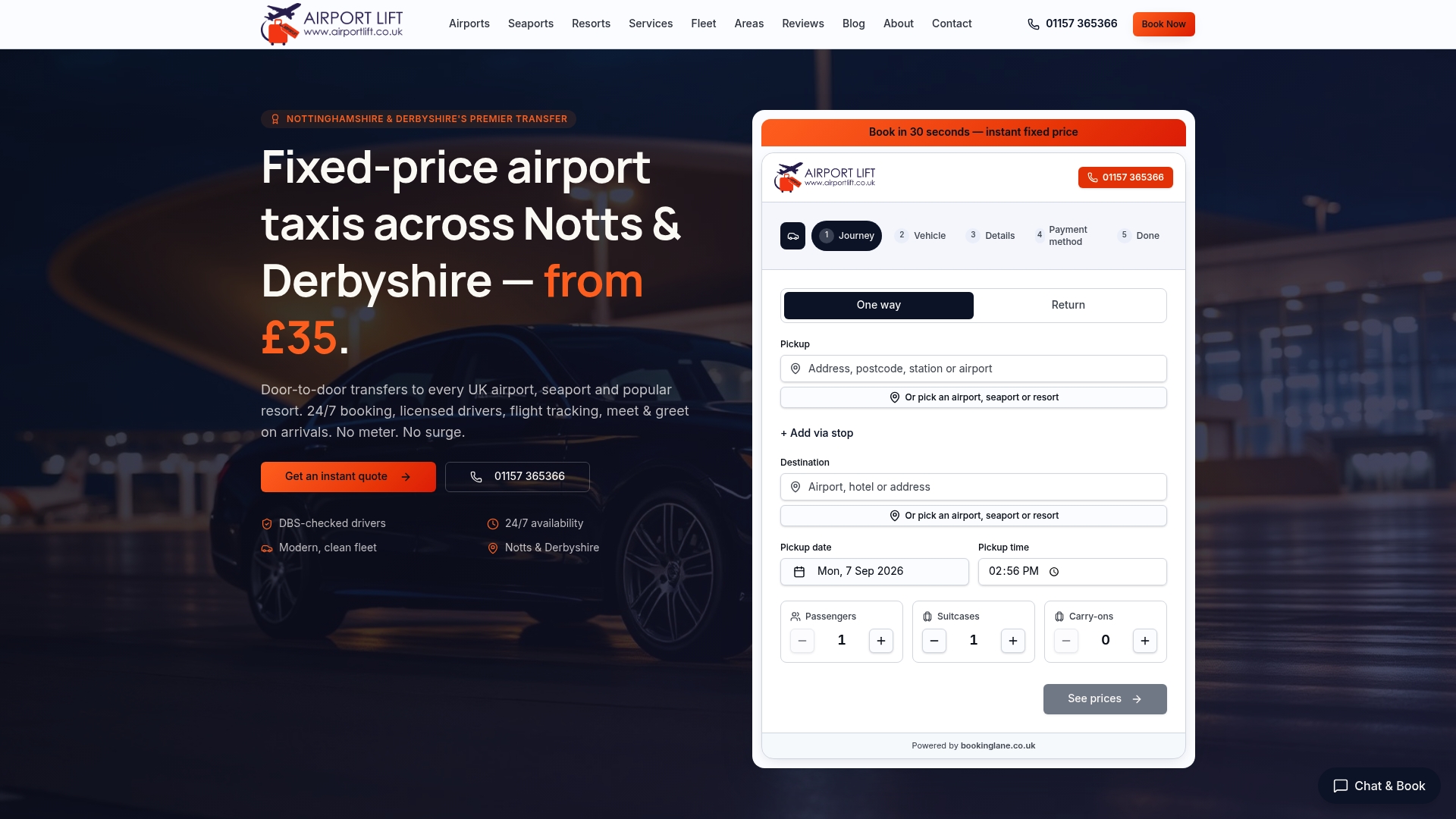
Drivers are licensed and DBS-checked, and the company’s Trustpilot reviews give you an independent record to check before booking, exactly the kind of trust signal worth verifying with any supplier. Coverage runs from Nottinghamshire and Derbyshire to every major UK airport, plus seaports and resort destinations, with meet-and-greet available for travellers who’d rather not manage their own luggage through a busy terminal. If you’ve got a flight, a meeting or a group trip booked and don’t want to leave the transfer to chance, get an instant fixed-price quote and lock in your pickup time now.
Sources
- Find-and-update
- Chauffeur vs Taxi: What’s the real difference? - Hadley Executive
- What’s the difference between a Chauffeur and a Taxi driver - Borjan
- Hadley Executive on Trustpilot
FAQ
Is Chauffeur a British Word?
Yes. “Chauffeur” comes from French but has been standard English usage for over a century, referring to a professional driver employed to drive a private or hired vehicle. In British usage it specifically implies a pre-booked, service-led role rather than on-demand driving.
Do I Need a Taxi Licence to Be a Chauffeur?
Chauffeurs typically operate under private hire vehicle (PHV) licensing rather than a taxi licence, since they work on pre-booked journeys rather than plying for hire on the street. The exact licence category depends on local licensing authority rules, so check with the relevant council before assuming either licence covers the other.
What Do British People Call a Taxi?
In Britain, “taxi” and “cab” are both common, alongside “minicab” for pre-booked private hire vehicles that aren’t licensed to be hailed on the street. A traditional London black cab is licensed to pick up passengers who hail it directly, unlike a minicab or chauffeur car.
Can a Chauffeur Drive My Car?
Some chauffeur services offer “own car” driving, where a licensed, vetted driver takes the wheel of your personal vehicle for an event or airport run. This differs from most bookings, where the operator supplies both the driver and the vehicle, such as with a fixed-price airport transfer.