5 Steps to DBS Checked Licensing for UK Taxi & PHV Drivers, Pro Tips

Taxi and private hire drivers in the UK normally need an enhanced DBS check, and most licensing authorities also require Children’s and Adults’ Barred List checks before they will issue or renew a licence. The council you apply to, not the driver or the operator, decides the exact route and paperwork. In practice, that means joining the DBS Update Service too, since most councils now expect it as standard.
TL;DR:
- Most UK licensing authorities require drivers to hold an enhanced DBS check, with barred-list checks, before license issuance or renewal, especially for taxi drivers and those transporting vulnerable groups.
- The correct application process involves applying under the proper “Other workforce” category, attending an identity verification appointment, and joining the DBS Update Service within 30 days of receiving the certificate to prevent delays.
- Applying at least eight to ten weeks before license expiry is essential, as delays often stem from mismatched documents, incomplete histories, or police information processing times.
- The DBS Update Service allows online status checks, but it does not replace a full reapplication if subscription lapses or for initial vetting purposes.
- Each council sets its own fees and rules for licensing, and drivers must meet additional requirements such as medical fitness and DVLA checks for endorsement history, which can vary significantly between authorities.
Table of Contents
- Which driver roles need a DBS checked drivers’ standard applied?
- What does an enhanced DBS check actually show?
- How do you apply for a driver DBS check step by step?
- How does the DBS Update Service work for drivers?
- Why does your local council make the final licensing decision?
- What can drivers do to avoid delays and rejected checks?
- How Airport Lift UK applies these standards in practice
- Why continuous checks matter more than a one-off certificate
- Book a fixed-price transfer with DBS-checked drivers
- Where to check the official rules yourself
- Sources
- FAQ
Which driver roles need a DBS checked drivers’ standard applied?
Hackney carriage and private hire drivers sit at the top of the list. Every council in England requires them to hold an enhanced DBS certificate before a licence is granted, and the statutory taxi and private hire vehicle standards set out why: these drivers regularly carry lone passengers, including children travelling unaccompanied to school.
Other roles fall under similar scrutiny, though the exact rules vary by contract and council:
- Delivery drivers working on school or council-commissioned transport contracts
- Drivers on adult social care or health transport contracts
- Some bus and coach operators, particularly where routes involve school runs
- Contract drivers for local authorities carrying vulnerable passengers
Transporting adults as part of health or care provision can shift a driver into a category where Adults’ Barred List checks become relevant, not just Children’s. This is exactly why the “Other workforce” category on the DBS application form matters: pick the wrong one and your certificate might not satisfy the council at all. If you are unsure which category applies to you, your licensing authority’s own guidance is the only reliable answer.
What does an enhanced DBS check actually show?
DBS checks come in three levels, and drivers frequently misunderstand where taxi licensing sits. A basic check reveals unspent convictions only. A standard check adds spent convictions and cautions. An enhanced check goes further still, adding relevant local police information and, when barred-list checks are requested, confirmation of whether someone is barred from working with children or vulnerable adults, according to official DBS guidance.

Enhanced DBS checks with barred-list requests are the level councils overwhelmingly expect from taxi and private hire applicants and at every licence renewal. That is a DfT recommendation, not a suggestion councils can quietly ignore.
Two things trip drivers up here:
- DVLA driving record checks are entirely separate from DBS checks. Councils run both, because a clean criminal record says nothing about your driving history.
- The certificate must be requested under the “Other workforce” category with taxi licensing specified. A generic enhanced DBS check obtained for a different purpose, such as a previous job in retail security, often gets rejected outright by the council.
Get the category wrong and you will be reapplying from scratch, which costs you both time and a second fee.
How do you apply for a driver DBS check step by step?
Getting this right the first time saves weeks. Follow this sequence:
- Contact your licensing authority first. Every council has its own application route and organisation reference number. Skipping this step is the single most common reason applications get bounced back.
- Complete the enhanced DBS application under the correct workforce category, with your full five-year address history and any previous names listed accurately.
- Attend an identity verification appointment. Follow the DBS identity-checking guidelines and use Route 1 photographic ID where you can, since it avoids slower secondary checks.
- Wait for your certificate, then present the original document, or its reference number, to your council as part of your licence application.
- Join the Update Service within 30 days of the certificate being issued, if your council requires ongoing status checks.
Pro Tip: Apply at least eight to ten weeks before your current licence expires. Councils cannot process an application faster just because your renewal date is close, and a lapsed licence means you cannot legally work.
Delays almost always trace back to one of three causes: mismatched ID documents, an incomplete address history, or a police force taking longer than expected to return local information for the enhanced check. None of these are the council’s fault, and none of them are quick to fix once the application is already submitted.
How does the DBS Update Service work for drivers?
The Update Service lets a licensing authority check your certificate’s status online instead of demanding a brand-new DBS check every time. It only works if you gave permission for status checks when you applied, and the council or employer running the check must have seen your original certificate and know its reference number, per the DBS’s own guidance. It supports safer recruitment, but it was never designed to replace a proper fit-and-proper assessment.
Fees are changing shortly, and they affect every driver renewing or applying fresh:
These are DBS’s own published fees. Councils routinely add their own administration, ID verification, or medical charges on top, so your total cost will be higher than the DBS figure alone. If your Update Service subscription lapses, you cannot simply top it back up. You will need to reapply for a fresh enhanced check, which costs more money and more time than staying subscribed.
Why does your local council make the final licensing decision?
DfT sets the national standard, but it deliberately leaves councils to decide their own fees, workflows and evidence requirements. That is why two neighbouring authorities can look quite different on paper while both technically following the same statutory guidance.
Your council’s “fit and proper person” test looks at more than your DBS certificate. It typically covers:
- Criminal record history, via the enhanced DBS and barred-list checks
- DVLA licence checks for endorsements, points and disqualifications
- Medical fitness, usually via a GP or approved medical assessment
- Complaint history, if you have held a licence before
Bristol City Council and Birmingham City Council both publish detailed combined DBS and licensing processes, and their fee schedules differ noticeably from each other. Always check your own council’s page rather than assuming national figures apply exactly to you.
What can drivers do to avoid delays and rejected checks?
Most rejected or delayed applications share the same handful of causes, and nearly all are avoidable:
- Gather original ID documents and write out your full five-year address and any previous-name history before you start the online form.
- Select the correct workforce category and purpose, “Other workforce” with taxi licensing specified, every single time.
- Join the Update Service within 30 days of your certificate arriving, and keep the subscription active rather than letting it lapse.
- Know that you can withdraw consent for status checks at any point, which stops an employer or council from checking your record further.
Pro Tip: If you’re a non-UK citizen, expect to provide extra evidence, such as a passport, visa, or biometric residence permit, and build in extra time for verification. This step alone accounts for a disproportionate share of avoidable delays.
How Airport Lift UK applies these standards in practice
Every driver working with Airport Lift holds a full licence and a current, enhanced DBS check. It’s not a box we tick once and forget. Fixed-price transfers, live flight tracking, meet-and-greet service and 24/7 availability all sit on top of that safeguarding foundation, because a reliable transfer starts with a driver you can trust before the car even arrives. Correct licensing and up-to-date checks are what make punctuality and consistency possible in the first place, not an afterthought bolted on for marketing purposes.
Why continuous checks matter more than a one-off certificate
A DBS certificate is a snapshot, not a permanent guarantee, which is exactly why the Update Service and periodic council reviews matter more than people assume. We think passengers are right to ask questions before they book: ask about a driver’s licence, whether checks are current, and how the company keeps that information up to date. A company that hesitates to answer those questions plainly is telling you something.
Booking through a service that treats licensing and DBS status as ongoing responsibilities, not paperwork from years ago, is one of the simplest ways to protect yourself and your family on a journey to the airport.
— AirportLift
Book a fixed-price transfer with DBS-checked drivers
Airport Lift UK gives you a fixed price at the point of booking, so there’s no surge pricing and no hidden fee waiting for you at the airport. Every driver on our books is fully licensed and DBS-checked, and every trip includes flight tracking as standard, so your driver knows if your flight lands early or late.
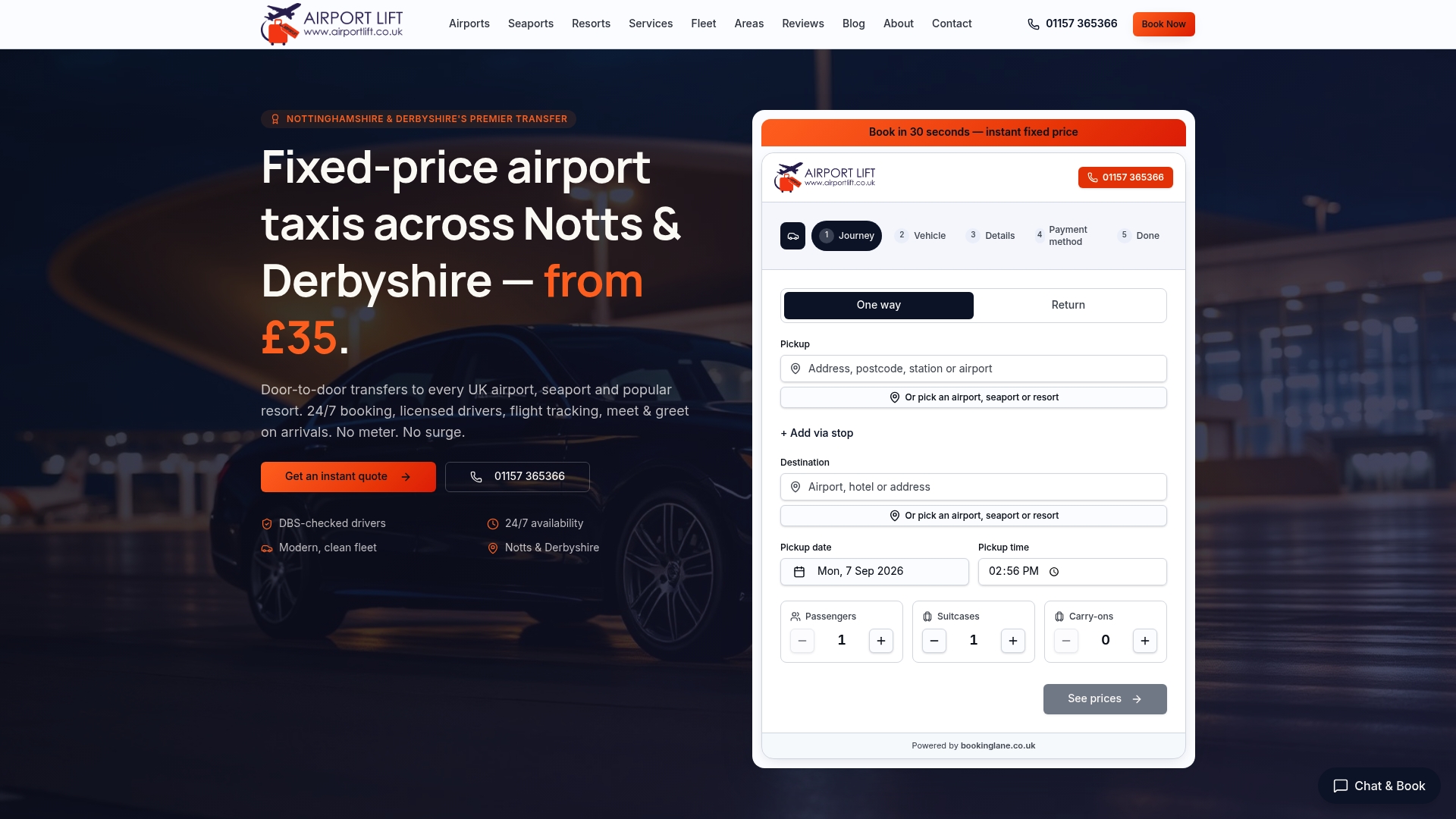
Whether you’re heading to East Midlands, Birmingham or Manchester Airport, need an executive car for a business trip, or want meet and greet waiting for you at arrivals, the price you’re quoted is the price you pay. Booking is available around the clock, whether your flight lands at 6 AM or you’re arranging a transfer for next month. Get an instant quote and book your airport transfer today.
Where to check the official rules yourself
For the statutory framework and application detail behind everything above, go straight to the primary sources rather than a summary of them:
- Statutory taxi and private hire vehicle standards (GOV.UK)
- DBS check guidance for applicants (GOV.UK)
- DBS Update Service (GOV.UK)
- DBS check for taxi and private hire drivers (Bristol City Council)
This article is general information, not a substitute for advice from a qualified lawyer. Consult a qualified legal professional about your own circumstances before acting on anything here.
Sources
FAQ
Are all taxi drivers DBS checked?
Yes, in practice. Licensing authorities across the UK require hackney carriage and private hire drivers to hold an enhanced DBS check, usually with barred-list checks, before granting or renewing a licence, following DfT’s statutory standards. A driver without a valid, current check cannot legally hold a licence.
Can non-UK citizens get a DBS check?
Yes, but they need to provide equivalent identity evidence, such as a passport, visa, or biometric residence permit, following the DBS identity-checking guidelines. This step often takes longer than for UK nationals, so build in extra time before your licence deadline.
What shows up on a DBS check in the UK?
It depends on the level. A basic check shows unspent convictions, a standard check adds spent convictions and cautions, and an enhanced check adds relevant local police information plus barred-list status where requested, according to DBS guidance. Taxi licensing normally requires the enhanced level.
Who does DBS checks in the UK?
The Disclosure and Barring Service processes the checks, but your licensing council decides which level you need and manages the actual application route. Airport Lift UK requires every driver to hold a current, enhanced DBS check before they carry a single passenger.
How long does a DBS check last for a taxi licence?
There’s no fixed national expiry date on a certificate itself, but most councils require rechecks at licence renewal, typically every one to three years depending on the authority. Staying subscribed to the DBS Update Service lets your council check your status between renewals rather than waiting for a fresh application.