
30 Days’ Credit or Section 75? Invoice Accounts vs Cards for UK Firms

If you book transfers regularly for a business, an invoice account usually suits you better: it simplifies expense reports and gives you a proper VAT invoice every time. If you are booking once or want extra protection on a high-value trip, a credit card wins, mainly because of Section 75 cover and VAT reclaim rules. Several UK transfer providers, including Airport Lift, offer corporate invoice accounts alongside standard card payment.
TL;DR:
- Section 75 applies to a single booking priced from £100 to £30,000, but split payments and employer issued cards can complicate who may claim.
- VAT recovery requires an invoice with the supplier’s registration number, rate, amount, service description, and supply date; a card statement alone does not qualify.
- Invoice accounts lack a fixed card ceiling, so businesses need approval rules; cards cap each holder’s spending but may restrict busy travel periods.
- Invoice suppliers commonly allow 30 days to pay, but overdue balances can trigger statutory interest and recovery costs; confirm the agreed deadline.
Table of Contents
- Practical comparison: invoice account versus credit card for UK bookings
- What to expect operationally when you pay by card or by invoice account
- VAT reclaim: what invoices must include and why invoice accounts usually help
- Consumer and commercial protections relevant to booking payments in the UK
- Quick checklist for travel arrangers: choose invoice account or credit card
- How Airport Lift supports corporate payment methods and makes invoicing straightforward
- Comparison of credit limit and spending control between invoice accounts and credit cards
- Impact on business credit score and reporting for invoice accounts vs credit cards
- Security and fraud protection differences between invoice accounts and credit cards
- How reward programs or loyalty benefits differ between credit cards and invoice accounts
- Publisher perspective: why we usually recommend an invoice account for regular corporate travel
- How to set up a corporate invoice account with Airport Lift
- FAQ
- Sources
Practical comparison: invoice account versus credit card for UK bookings
Both payment routes get you to the airport. The difference shows up in your accounts department, not on the road.
An invoice account means you are billed monthly rather than paying at the point of booking. Most suppliers set payment terms around 30 days, which gives your finance team breathing room and produces a clean paper trail for every journey. You get a proper VAT invoice per trip or per statement, which makes reconciliation far simpler than chasing card receipts. The trade-off sits with the supplier, who carries the credit risk until you pay.
A credit card settles immediately. That speed brings its own protection: purchases within certain value limits may qualify for Section 75 protection, which makes your card provider jointly liable if something goes wrong with the booking. Debit cards do not carry this right.
- Invoice account: monthly billing, typically 30-day terms, consolidated VAT invoicing, easier reconciliation, but it shifts cashflow risk onto the supplier.
- Credit card: instant payment, Section 75 eligibility on qualifying purchases, chargeback as a fallback, but receipts can be messier for expense claims.
One more practical point: a supplier cannot simply charge you extra for paying by card. Under the Consumer Rights (Payment Surcharges) Regulations 2012, any surcharge must reflect the merchant’s actual processing cost rather than an arbitrary add-on, so watch for suppliers quoting one price for card payment and a cheaper one for invoice or bank transfer.
What to expect operationally when you pay by card or by invoice account
The administrative steps differ quite a bit depending on which route you choose, so it helps to know what is coming before you book.
- Card booking: you pay at the point of reservation, receive a confirmation and a line on your card statement, then file both for expenses.
- If something goes wrong: you raise a claim with your card issuer, either a chargeback or, for qualifying purchases, a Section 75 claim.
- Invoice account set-up: you complete a credit application, supply trading references, and agree billing frequency, usually monthly.
- Ongoing invoice cycle: the supplier issues statements against agreed terms, your finance team reconciles them against bookings, and payment is made within the agreed window.
A few practical notes worth flagging: deposits are rare on standard transfer bookings, split payments between personal and company cards can complicate a Section 75 claim, and employer-issued corporate cards sometimes mean the cardholder is not the party legally entitled to claim, so it is worth checking your card type before relying on that protection.
VAT reclaim: what invoices must include and why invoice accounts usually help
To reclaim VAT on a business transfer, you need a valid VAT invoice, not just a card statement. HMRC’s record-keeping guidance sets out what that invoice must show:
- the supplier’s VAT registration number
- the VAT rate applied
- the total VAT charged
- a description of the taxable supply and the date
A card statement rarely gives you all of this in one place. An invoice account, by contrast, typically produces a proper VAT invoice as part of its monthly billing cycle, which is one reason finance teams prefer it for repeat bookings.
Keep invoices filed against expense reports as you go rather than reconstructing them at quarter end. If your business also reclaims VAT on fuel or mileage, HMRC’s motoring expenses guidance sets out similar record-keeping expectations, and the same discipline applies to transfer invoices.
Consumer and commercial protections relevant to booking payments in the UK
Two separate protections matter here, and they are not interchangeable.
- Section 75 makes your credit card provider jointly liable alongside the supplier for purchases with a single-item cash price between £100 and £30,000, even if you only charged part of it to the card.
- Chargeback is a different mechanism, available on debit and credit cards, where your bank can attempt to reverse a payment. It carries no legal guarantee and Citizens Advice notes it works differently from Section 75 in both eligibility and outcome.
- Suppliers have rights too. Under the Late Payment of Commercial Debts (Interest) Act 1998, unpaid invoices can attract statutory interest and fixed recovery costs, which is partly why suppliers favour agreed terms over informal credit.
Quick checklist for travel arrangers: choose invoice account or credit card
Run through this before you book, especially if you are setting policy for a whole team.
- How often do you book? Regular, repeat transfers point towards an invoice account; a one-off trip points towards a card.
- How much is at stake? A high-value single booking benefits from Section 75 cover, so a card makes sense.
- Do you need to reclaim VAT? Confirm the supplier will issue a proper VAT invoice; invoice accounts usually do this as standard.
- What does your company policy say? Check approval workflows and card rules before you commit either way.
Pro Tip: Keep a simple internal rule of thumb, such as “card for bookings over £500 or one-off trips, invoice account for everything else”, so staff are not deciding from scratch each time.
How Airport Lift supports corporate payment methods and makes invoicing straightforward
We offer corporate accounts with monthly invoicing alongside fixed, upfront pricing, so there are no surprise charges to reconcile at month end. Features like flight tracking and meet-and-greet options can reduce the chance of a disputed or missed pickup, which helps keep invoices clean. The drivers are licensed and DBS-checked, and the company has strong Trustpilot feedback from regular and one-off customers alike. If you want to set up monthly billing, our corporate accounts page explains how to request VAT invoices and agree terms.
Comparison of credit limit and spending control between invoice accounts and credit cards
Credit cards come with a fixed limit set by the issuer, which caps what any one employee can spend regardless of what the business actually needs that month. That works well for ad hoc control but can be restrictive if several people are booking transfers for a busy travel period.
An invoice account does not usually work on a hard limit in the same way. Instead, the supplier agrees terms with your business, and spending is controlled internally through your own approval process, purchase orders or booking authorisations rather than a card ceiling. This gives you more flexibility for fluctuating travel volumes, but it also means the discipline has to come from your own policy rather than a card network’s limit.
For a company with several bookers across departments, that distinction matters when deciding who can commit spend. A credit card naturally limits exposure per cardholder, while an invoice account depends on your internal sign-off process to prevent uncontrolled spending. Businesses with a clear approval workflow tend to find invoice accounts easier to scale; those without one often prefer the built-in ceiling a card provides.

Impact on business credit score and reporting for invoice accounts vs credit cards
A business credit card typically sits on your company’s credit file in a fairly standard way, reported by the card issuer like any other revolving credit facility, and how you manage it, including repayment timing, can feed into your business credit score.
An invoice account works differently. Because it is a trade credit arrangement between you and a specific supplier rather than a product from a credit reference agency, it does not always appear on your credit file in the same automatic way a card does. Some suppliers do report payment behaviour to credit agencies or use it when deciding whether to extend better terms later, so consistently paying on time, within the 30-day window suppliers commonly set under the Late Payment of Commercial Debts (Interest) Act 1998, can still support your standing with that supplier and others watching your payment history.
Either way, the simplest route to a healthy record is the same: pay on time, every time, regardless of which method you use.
Security and fraud protection differences between invoice accounts and credit cards
Credit cards carry well-established fraud protections. Card issuers monitor transactions, and Section 75 or chargeback gives you a route to recover funds if a booking goes wrong or a payment is disputed. That protection sits with the card network and your bank, independent of the supplier.
Invoice accounts shift the security question elsewhere. There is no card number exposed to each booking, which removes one common fraud vector, but there is also no automatic chargeback or Section 75 safety net if a dispute arises. Protection instead relies on your contract terms with the supplier and your own internal checks, such as confirming bookings against a pre-approved supplier list.

Neither method is inherently safer across the board. Cards protect the individual transaction; invoice accounts reduce the number of card details in circulation but put more weight on supplier vetting and contract terms. Choosing a supplier with fixed, transparent pricing and clear booking confirmations, as we provide, reduces the kind of disputes that would otherwise test either protection route.
How reward programs or loyalty benefits differ between credit cards and invoice accounts
Credit cards often come with points, cashback or travel perks attached to spending, and a range of UK travel cards compare these benefits for frequent travellers weighing up purchase protection against rewards. For an employee booking transfers on a personal or company card, these perks can add up over a year of regular travel.
Invoice accounts are not built around loyalty points in the same way. The benefit is structural rather than transactional: predictable monthly billing, consolidated VAT invoices and, with suppliers like us, fixed pricing that avoids the surge charges some card-based bookings can attract. For a business comparing the two, the question is less “which earns more points” and more “which saves more admin time and keeps costs predictable”, which usually favours the invoice account for repeat corporate travel.
Publisher perspective: why we usually recommend an invoice account for regular corporate travel
For businesses booking transfers regularly, predictable monthly invoicing, straightforward VAT recovery and fixed pricing cut down on admin and nasty surprises far more than chasing card receipts each month. That said, a single high-value trip or a consumer traveller booking occasionally often gets more value from the protections a credit card brings.
— AirportLift
How to set up a corporate invoice account with Airport Lift
Setting up monthly invoicing with us starts with a short request through our corporate accounts page, where you can share your booking volumes and billing details.
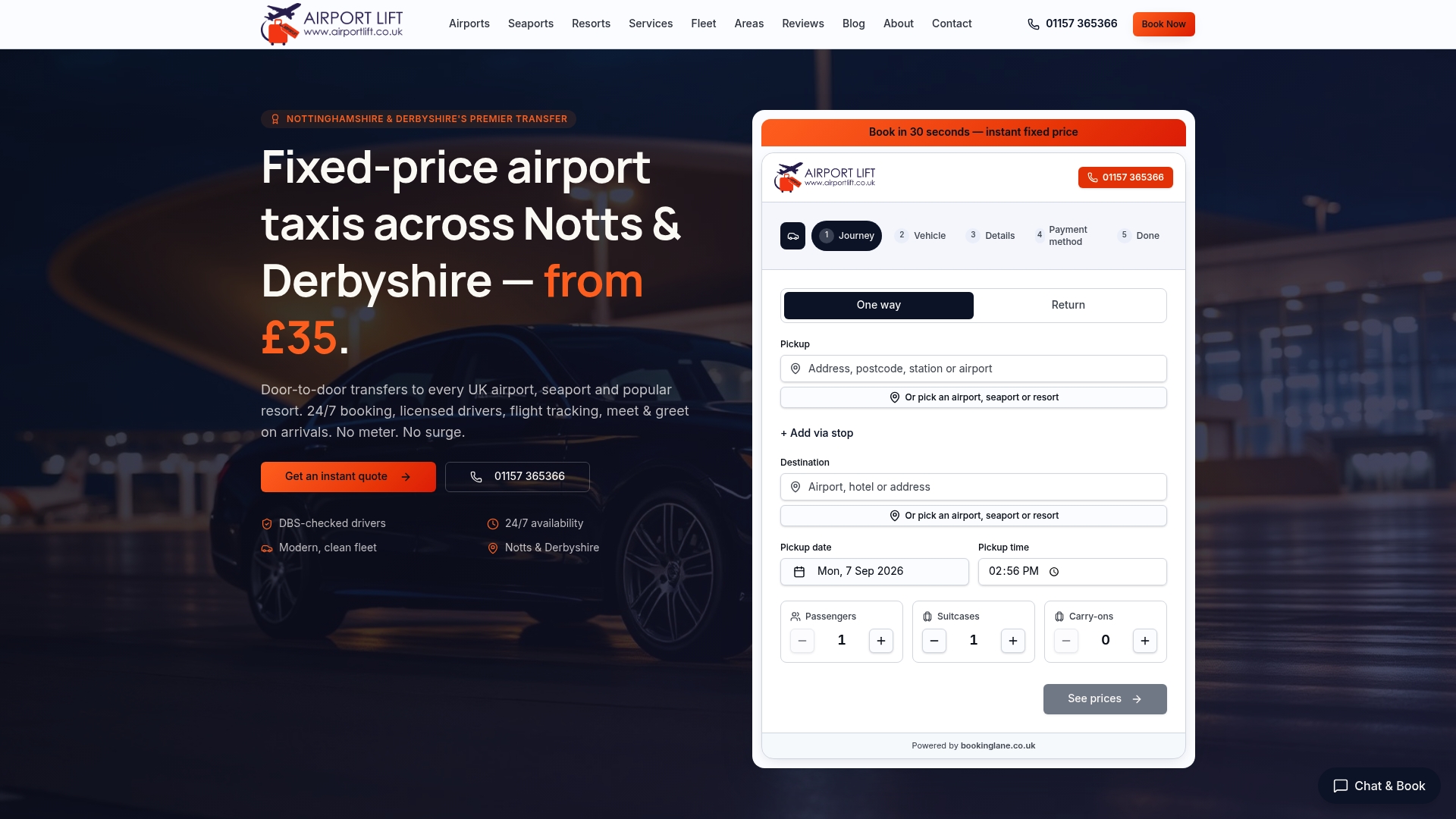
We typically confirm terms and account details within a few working days, and VAT invoices are issued as part of your standard monthly statement. If you need a transfer booked straight away instead, you can get an instant quote without setting up an account first.
FAQ
Does Section 75 cover airport transfer bookings paid by credit card?
Section 75 can apply if the single-item cash price of the booking falls between £100 and £30,000, making your card provider jointly liable alongside the supplier. It does not apply to debit cards, and splitting payment between a personal card and another method can affect your claim, as explained in Section 75 of the Consumer Credit Act 1974.
Can I reclaim VAT on a transfer booked by credit card?
Yes, provided the supplier issues a valid VAT invoice showing their VAT number, the rate applied and the VAT amount, as set out in HMRC’s VAT record-keeping guidance. A card statement alone usually will not satisfy this requirement.
What payment terms are typical for a UK invoice account?
Most suppliers default to 30-day payment terms unless another period is agreed in writing, and late payment can attract statutory interest and recovery costs under the Late Payment of Commercial Debts (Interest) Act 1998.
Can a supplier charge extra for paying by credit card?
Surcharges are restricted under the Consumer Rights (Payment Surcharges) Regulations 2012, which stop merchants charging more than their actual cost of processing that payment method.
How do I set up a corporate account for transfers with Airport Lift?
You can request a corporate account through our corporate accounts page, where we confirm billing details and invoicing terms before your first monthly statement.
Sources
- Consumer Credit Act 1974 — Section 75
- Gov
- Gov
- Getting your money back if you paid by card or PayPal — Citizens Advice