Stop an uninsured ride: spot licensed UK taxis and private hire

Taxis can be hailed on the street or picked up at a rank and use a metered fare; private hire vehicles must be booked in advance through a licensed operator. Never get into an unbooked private hire vehicle, even if a driver offers. Always match the driver and vehicle to your booking confirmation. Licensing rules, including fees and local policies, vary by council, so the fine detail can differ depending on where you’re travelling.
TL;DR:
- Licensing rules, driver checks, and vehicle standards vary by local authority, so always verify the specific requirements for your area before traveling.
- Private hire vehicles must be booked in advance through a licensed operator, and accepting fares without prior booking is a criminal offense that can invalidate insurance.
- Fares for taxis are usually metered and capped by council tariffs, while private hire fares are quote-based and should match the confirmed quote seen before starting the journey.
- Check vehicle plates, driver ID badges, and match registration details to your booking for added safety before entering a licensed vehicle.
- Always obtain and keep a booking reference when using private hire, and report any suspicious or unbooked vehicles to authorities to avoid traveling uninsured or unlawfully.
Table of Contents
- Licensed taxi vs private hire: how licensing and driver checks actually work
- How plying for hire actually works, step by step
- How fares are set: meters, tariffs and pre-booked quotes
- Spotting a licensed vehicle before you get in
- What operators are legally required to do
- What to do if a journey feels wrong
- Choosing between a taxi and private hire for your trip
- Why licensing checks are the part passengers overlook
- Book a fixed-price transfer instead of hoping a taxi turns up
- Official guidance and data to consult
- Sources
- FAQ
Licensed taxi vs private hire: how licensing and driver checks actually work
Every taxi, private hire vehicle (PHV) and operator in England is licensed by a local authority, or by Transport for London if you’re travelling in the capital. That means the rules, fees and even vehicle age limits can shift from one council area to the next, so what applies in Nottingham may not apply in Derby.
Before any driver gets behind the wheel, they must clear a set of checks designed to protect you. According to the statutory taxi and private hire vehicle standards, licensing authorities must assess every applicant as “fit and proper” before granting a licence.
That assessment typically includes:
- An enhanced DBS criminality check, refreshed periodically rather than done once and forgotten
- A medical assessment against DVLA Group 2 standards, the same higher bar used for lorry and bus drivers
- Safeguarding training, covering how to recognise and respond to vulnerable passengers
For private hire specifically, there’s a third layer. The driver, the vehicle, and the operator dispatching the job each need their own separate licence, and all three should line up on any given trip. This is often called the triple licensing lock, and it exists precisely so a booking can be traced back to a named, vetted operator if anything goes wrong.
How plying for hire actually works, step by step
The legal line between a taxi and a private hire vehicle comes down to one concept: plying for hire. A licensed taxi can legally stop for you on the street or wait at a rank, because it holds a licence that permits it to solicit fares directly from the public. A private hire vehicle cannot. Legally, it must be booked in advance, whether that’s through an app, a phone call, or in person at a licensed operator’s office.
This isn’t a technicality. According to guidance from St Helens Borough Council, a private hire driver who accepts a fare without a prior booking is committing a criminal offence in many cases, and doing so can invalidate their insurance entirely. If that vehicle is then involved in a collision, you could be a passenger in an uninsured car with no idea until it’s too late.
Here’s how to stay on the right side of that line:
- If you want to flag down a car on the street, only do it with a vehicle showing taxi plates, not a PHV.
- Book private hire journeys only through a recognised operator, app, or office, never by approaching a parked minicab directly.
- Ask for a booking reference and operator name the moment your journey is confirmed.
- Check that the driver and vehicle registration match what you were told before you get in.
TfL’s own guidance puts it plainly: unless you’re hailing a licensed taxi, don’t get in unless you’ve booked it.
How fares are set: meters, tariffs and pre-booked quotes
Taxi fares are usually metered, and many local councils set a maximum tariff a taxi can charge. That protects you in situations where you genuinely can’t shop around, such as flagging one down outside a station at midnight. Private hire fares work differently. They’re generally market-driven, set by the operator, and given to you as a quote before the journey begins rather than ticking up on a meter.
That distinction matters when it comes to price certainty:
- Taxis: metered fare, often capped by a council tariff, calculated as you travel
- Private hire: fixed or estimated quote agreed at booking, confirmed before you set off
Pro Tip: Screenshot or save your booking confirmation and quoted price before you travel. If a private hire fare on arrival doesn’t match what you agreed, you have written proof to raise with the operator.
If a taxi fare seems off, ask to see the driver’s tariff card, which they’re required to display. If a private hire fare seems off, your first call should go to the operator, not the driver.
Spotting a licensed vehicle before you get in
A few quick checks can tell you a lot before you open the car door. Licensed taxis typically carry a visible licence plate (often on the rear), a driver ID badge with a photo, and in many areas, an illuminated roof sign. Private hire vehicles carry their own council-issued plates too, usually on the front and rear, plus a door sticker in some areas, though the exact requirements do vary by local authority.
Don’t rely on a sticker alone; it’s not proof of an active, legitimate booking.
- Check the plate number against what your app or operator confirmation shows
- Ask the driver to confirm your name and destination before you get in
- Match the vehicle registration and driver photo to your booking details
What operators are legally required to do
Booking through a private hire operator isn’t just a formality. Operators are legally required to keep records of every booking they take, and to ensure that any driver or vehicle they dispatch holds a valid licence. That’s a meaningful safeguard, because it means your journey leaves a paper trail.
According to the private hire vehicle licensing guidance note, operators must be contactable and are accountable for the vehicles and drivers they send out, and licensing authorities can inspect those booking records.
For you as a passenger, that translates into practical reassurance:
- A traceable booking record if you need to raise a complaint or a safety concern
- A named operator you can contact directly if something feels wrong
- The ability to check an operator’s licence status with your local council if you’re ever unsure
What to do if a journey feels wrong
An unbooked private hire vehicle isn’t just against the rules, it can mean you’re travelling in a car with no valid insurance for that trip. If the vehicle is in a collision, that gap in cover becomes your problem, not just the driver’s.
Watch for warning signs: a driver with no visible ID, someone asking for cash with no booking reference attached, or a refusal to name the operator when asked.
- Decline the ride if anything doesn’t match your booking or if there simply isn’t one
- Note the vehicle registration and driver description if you feel unsafe getting out
- Report it to the operator, your local licensing authority, or the police if you believe a crime has occurred
Pro Tip: Keep your operator’s contact number saved before you travel, not searched for afterwards. In the moment, you want to be able to call, not Google.
Choosing between a taxi and private hire for your trip
The right choice usually depends on how much you can plan ahead.
- Grabbing a spontaneous ride into town or from a rank outside a venue: a licensed taxi wins, since it’s available on demand with a regulated meter.
- Heading to the airport, a seaport, or a business meeting where timing and price certainty matter: private hire, booked in advance, is the better fit, particularly when flight tracking or meet-and-greet options are involved.
- Travelling as a group or family with luggage: pre-booked private hire lets you specify vehicle size and get a fixed quote rather than hoping a large enough taxi turns up.
Before any of these journeys, run through the same short checklist: confirm your booking reference, note the operator’s name, check the driver’s ID, and match the vehicle registration. It takes thirty seconds and it’s the single best habit for staying safe with either type of service.
Why licensing checks are the part passengers overlook
Most people focus on price when comparing a licensed taxi against a private hire booking, and that’s understandable, but it misses the more important question: who is accountable if something goes wrong? A licensed operator with proper booking records answers that question before you even get in the car.
Some licensed private hire operators require drivers to undergo DBS checks and ensure every journey is booked and recorded before it happens. Fixed-price fares, flight tracking, and meet-and-greet options can be features of properly recorded, traceable bookings. You get a confirmation with your driver’s details attached, not a mystery car pulling up.

The safety points in this guide aren’t abstract regulatory boxes to tick. They’re the difference between a traceable journey and one that isn’t, and that’s worth remembering every time you book.
— AirportLift
Book a fixed-price transfer instead of hoping a taxi turns up
Airport Lift UK exists because “hoping a taxi turns up” is a bad plan for an early flight or a cruise departure. Every fare is fixed and agreed before you travel, so there’s no meter running and no surge pricing if your flight lands late.
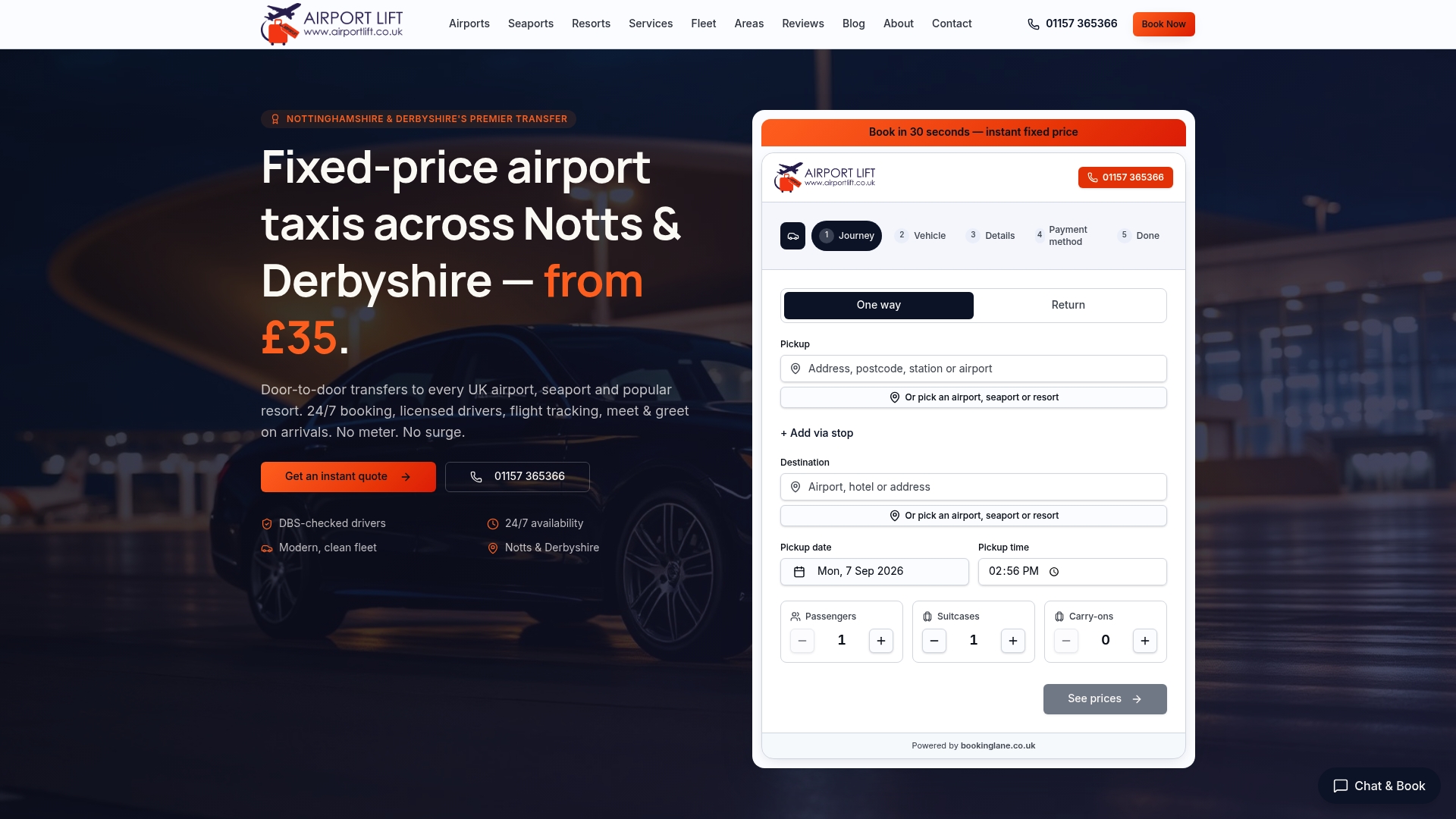
Every driver is licensed and DBS-checked, and bookings include flight tracking so your driver adjusts automatically if your arrival time shifts. Whether you need an airport transfer, a seaport pickup, or an executive car for a business trip, you can get an instant quote and book online in a couple of minutes.
Whichever operator you choose, whether it’s us or someone else, check your confirmation for the operator’s name, the vehicle registration, and the driver’s ID before you travel. It’s a small habit that protects you regardless of who’s driving.
Official guidance and data to consult
- Statutory taxi and private hire vehicle standards: the DfT’s core rulebook on licensing aims and the triple-lock principle
- Taxi and private hire vehicle statistics: England 2026: official fleet numbers and trends
- Taxi and private hire vehicle licensing: best practice guidance: detail on driver checks and fit-and-proper assessments
- Your own local council’s licensing pages, since fees, vehicle age limits and specific policies vary by area
Sources
- Taxi and private hire vehicle statistics: England 2026
- Taxi and private hire vehicle licensing: best practice guidance
- Statutory taxi and private hire vehicle standards
FAQ
What is the difference between a taxi licence and a private hire licence?
A taxi licence permits a vehicle to ply for hire, meaning it can be hailed on the street or picked up at a rank. A private hire licence only permits pre-booked journeys arranged through a licensed operator, and the driver, vehicle and operator all need separate, matching licences under the statutory standards.
Is private hire cheaper than a taxi?
It depends on the journey. Taxis use a meter, often capped by a council tariff, while private hire fares are quoted upfront and tend to be set by the operator based on demand rather than a regulated maximum, so pre-booked options like Airport Lift UK’s fixed £35 fare to East Midlands Airport can offer more price certainty than a metered street journey.
What is the difference between a PHV and a taxi?
A taxi (hackney carriage) can pick up passengers directly from the street or a rank, while a private hire vehicle (PHV) must be booked in advance through a licensed operator and cannot legally accept a fare on the spot. Both require separate local authority licensing, but the driver checks (DBS, DVLA Group 2 medical) apply to both types.
Are private hire vehicles classed as taxis?
No, private hire vehicles are a legally distinct category from taxis, even though people often use the word “taxi” loosely for both. As of April 2026, there were 52,300 licensed taxis compared with 290,000 private hire vehicles in England, showing PHVs make up the much larger share of the licensed fleet despite the separate rules.