
£1–£3 or 10%: How to Tip Taxi Drivers in the UK and Who Gets Card Tips

There is no fixed amount you must pay. Cash is the clearest way to tip, since card and app systems handle gratuities differently depending on the operator.
TL;DR:
- Tipping in UK taxis is flexible, with short local rides typically rounded up to the nearest pound or increased by £1 to £2.
- For longer or exceptional journeys, around 10% of the fare is considered reasonable, while industry guidance views 10 to 15% as generous.
- Cash tips are the clearest method, especially if you say “keep the change” when handing over small notes or coins; card and app tips can be inconsistent.
- Tips for airport pickups and luggage assistance usually range from £2 to £3, with larger tokens appropriate for extra help or meet-and-greet services.
- Tipping is optional for fixed-price transfers, and many passengers pay just the fare without adding anything else, particularly when a service charge is already included.
Table of Contents
- 1. How much to tip: concrete amounts and quick rules
- 2. Black cabs versus private hire and pre-booked transfers
- 3. Paying by card versus cash: how to add a tip and avoid confusion
- 4. Airport transfers and luggage: what’s customary for meet-and-greet
- 5. When it’s appropriate to skip or reduce a tip
- 6. Legal and tax notes: HMRC, VAT and the Tipping Act
- 7. Practical phrases and etiquette for tipping politely
- Our view on tipping for airport transfers
- Fixed-price transfers that remove the guesswork
- Sources
- FAQ
1. How much to tip: concrete amounts and quick rules
For everyday, short journeys, rounding up to the nearest pound or adding £1 to £2 on top of the fare is the normal approach. If your fare comes to £7.40, handing over £8 or £9 covers it without any awkward maths. For longer trips, motorway runs or journeys where the driver has gone out of their way, around 10% is a reasonable benchmark, and industry guidance treats 10 to 15% as unusually generous rather than the norm.
- Short local ride, fare £6.50: round up to £7 or £8.
- Longer cross-town journey, fare £22: around £2 or a rounded-up 10%.
- Airport or minicab pickup with luggage help: £2 to £3 is a common thank-you.
- Pre-booked fixed-price transfer: no percentage needed since the fare is already agreed.
None of these are compulsory. They’re simply the amounts most passengers reach for when they want to say thanks without overthinking it.
2. Black cabs versus private hire and pre-booked transfers
Black cabs run on a meter, and in London the customary habit is to round the fare up to the nearest pound rather than calculate a percentage, according to VisitLondon’s guidance for passengers. Private-hire cars and minicabs usually quote a fare in advance or charge a fixed price, so any tip sits entirely on top and is left to your judgement.

Pre-booked, fixed-price transfers work differently again. Because the price is agreed before you travel, there’s no fare to round up or percentage to work out. If you want to thank the driver for extra help, a small cash token does the job. It’s worth confirming the payment arrangement when you book, so there are no surprises at drop-off.
3. Paying by card versus cash: how to add a tip and avoid confusion
Card terminals and booking apps handle tips inconsistently between drivers and operators, so it’s worth checking how the tip is processed before you confirm payment. Cash remains the most direct method: handing over a little extra and saying “keep the change” leaves no room for confusion about who receives it.
- Look at the card terminal screen before confirming a tip amount.
- With cash, say “keep the change” as you hand it over.
- If a tip goes through an app or operator account, ask whether it reaches the driver directly.
- Carry a few small notes or coins if you’d rather tip in person.
Pro Tip: Keep a couple of pound coins in your pocket for taxi journeys so you’re never caught relying on a card machine to tip fairly.
4. Airport transfers and luggage: what’s customary for meet-and-greet
On airport pickups and minicab transfers, £2 to £3 is a common gesture when the driver helps carry bags to the boot or up to your door, according to Taxicode’s driver guidance. With fixed-price transfers, tipping stays optional. A small cash token is simply a way of acknowledging extra effort, not an expected addition to the fare.

Where a driver provides a meet-and-greet service, tracks your flight, or manages a larger group with multiple bags, it’s reasonable to scale the token up slightly and be clear about what it’s for. A quick “this is for the extra help” avoids any ambiguity when you hand it over.
5. When it’s appropriate to skip or reduce a tip
Tipping is a thank-you, not an obligation, and there are plenty of situations where skipping one is entirely normal.
- Skip the tip if the service was poor, unsafe or the driver was rude.
- If a mandatory service charge already appears on the bill, any further tip is optional.
- For many short, pre-agreed private-hire fares, passengers commonly pay the fare and nothing more.
- If there’s a dispute over the fare, ask for a receipt and note the operator’s details before raising it further.
None of this reflects badly on you as a passenger. Tipping only makes sense when the service has genuinely earned it.
6. Legal and tax notes: HMRC, VAT and the Tipping Act
HMRC’s VAT Notice 700/25 confirms that voluntary passenger tips are not payment for the taxi journey itself and sit outside the scope of VAT, which is why a tip never gets folded into the taxable fare. Separately, the Employment (Allocation of Tips) Act 2023 and its statutory code of practice set out how employers must fairly and transparently distribute tips when they control how those tips are collected, such as through an app or a central account.
This mostly affects operators who handle tips centrally rather than drivers who take cash tips directly. If you’d prefer certainty that your tip reaches the driver, it’s entirely reasonable to ask the operator how card or app tips are allocated before you confirm one.
7. Practical phrases and etiquette for tipping politely
A few short phrases cover almost every tipping situation you’ll meet in a UK taxi.
- “Keep the change” when handing over cash above the fare.
- “That’s fine, thanks” if you’re paying the exact fare with no tip.
- “Is that tip passed to the driver?” before confirming a card or app tip.
- State the amount clearly if you’re leaving something more generous for exceptional help.
If you ever need a record of the payment, ask for a receipt before you get out. It settles any confusion and takes a few seconds.
Our view on tipping for airport transfers
We quote fixed prices upfront, so passengers never need to calculate a tip to know what they owe. Tipping stays entirely optional and is left to your judgement. Drivers are licensed and DBS-checked, and it’s common for passengers to leave a small cash thank-you when a driver helps with luggage or provides a meet-and-greet. If you’d like to know how payment works before you travel, just ask when you book or when the driver arrives.
— AirportLift
Fixed-price transfers that remove the guesswork
Working out a tip is far simpler when you already know exactly what the journey costs. Airport Lift quotes fixed prices for transfers across Nottinghamshire and Derbyshire, so there’s no meter running and no surge to second-guess, whether you’re heading to East Midlands Airport, Manchester Airport or London Heathrow.
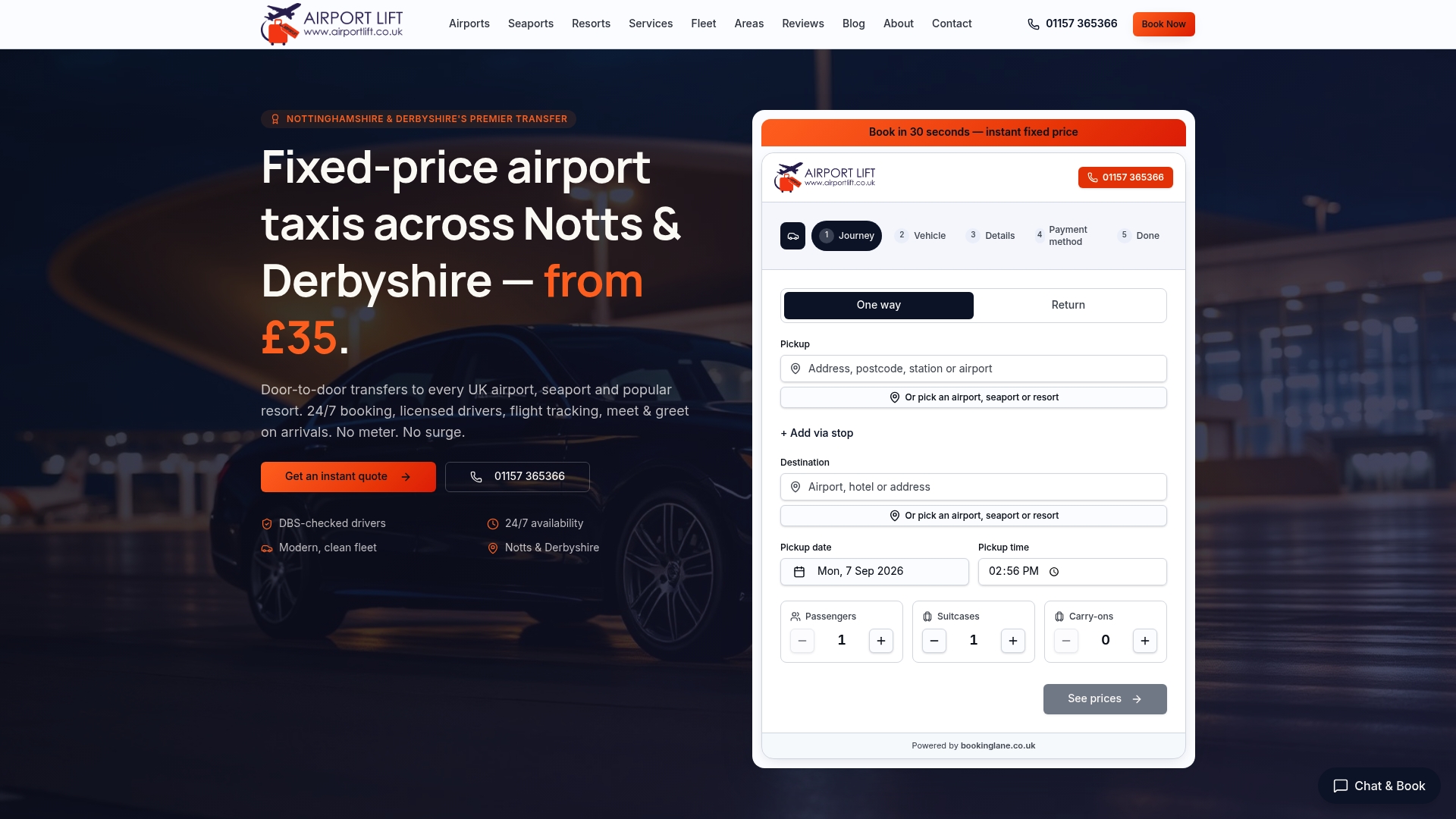
Because the fare is agreed before you travel, any tip you leave is simply a personal thank-you rather than a calculation. Drivers are licensed and DBS-checked, flight tracking is included, and meet-and-greet is available if you’d like extra help at the terminal.
If you want a guaranteed price before you book, check fixed-price airport transfers and get an instant quote for your route.
Sources
This article draws on HMRC’s VAT Notice 700/25, the government’s code of practice on tip distribution, VisitLondon’s guidance on black cabs, and practical guidance from Taxicode and TaxiInsurer. For broader chauffeur and executive transport context, see Chauffyr’s UK service overview.
- Gov
- Taxis, black cabs and minicabs in London — VisitLondon
- Do I need to tip the driver? — Taxicode support
- A quick guide to taxi tipping — TaxiInsurer
FAQ
Is 20% a good tip for a taxi?
Industry guidance treats 10 to 15% as unusually generous rather than the norm.
Is it rude not to tip in the UK?
No, tipping a taxi driver in the UK is entirely optional, and paying the exact fare is perfectly normal. Many passengers on short, pre-agreed private-hire journeys don’t add anything on top.
Is a 10% tip okay in the UK?
Yes, around 10% is a reasonable benchmark for longer or exceptional journeys, according to TaxiInsurer’s guidance. For shorter trips, rounding up or adding £1 to £2 is more typical.
What’s the standard tip amount for UK taxis?
There’s no fixed standard. The common approach is rounding up or adding £1 to £2 on short trips, with around 10% reserved for longer or exceptional service, as outlined by VisitLondon and TaxiInsurer.
Does Airport Lift expect a tip on fixed-price transfers?
No, Airport Lift’s fares are fixed and agreed before travel, so tipping is entirely optional. Passengers commonly leave a small cash token if a driver has helped with luggage or provided meet-and-greet assistance.