
20% VAT on UK Taxi Fares: 2026 TOMS Change for Drivers and Businesses

Yes. When a taxi or private hire fare is supplied by a VAT-registered business, the whole fare, including waiting time and baggage charges, is standard-rated at 20%. Many individual drivers stay below the VAT threshold and charge no VAT at all. A legislative change effective 2 January 2026 also stops larger operators using a separate margin scheme to reduce the VAT they charge.
TL;DR:
- VAT applies to the total taxi fare, including waiting time, baggage fees, and contract extras, when the provider is VAT-registered, at a 20% rate.
- Only drivers or operators exceeding £90,000 annual taxable turnover must register for VAT; smaller drivers typically charge no VAT.
- Reclaiming VAT requires a proper invoice showing the supplier’s VAT number, date, description, and VAT amount, preferably requested at booking.
- Tips are outside VAT charges, but extras included in the fare, such as meet-and-greet or child seats, are taxable if added by the operator.
- From early 2026, standalone taxi and private hire fares will be taxed on the full amount, as they are excluded from the Tour Operators’ Margin Scheme.
Table of Contents
- What VAT actually applies to a taxi fare in the UK
- Who has to register for VAT, and who actually charges it
- How business travellers reclaim VAT on taxi fares
- What happens to tips and optional extras
- The 2025 to 2026 change: taxis and the Tour Operators’ Margin Scheme
- A compliance checklist for drivers and small operators
- What this means for passengers and local transfer services
- Booking a transfer with clear, VAT-ready pricing
- Where to check the primary VAT rules yourself
- Sources
- FAQ
What VAT actually applies to a taxi fare in the UK
VAT on taxi fares works exactly as it does with most other services: if the supplier is VAT-registered, the tax sits on top of (or is baked into) the price you pay. The standard 20% rate applies to the total fare, not just the base mileage charge. That catches more of the bill than most passengers realise.
The following elements are all treated as part of the taxable supply when the driver or operator is VAT-registered:
- The metered or fixed fare itself
- Waiting time charged during the journey
- Baggage handling fees
- Contract extras that form part of the booking, such as child seats or meet-and-greet add-ons
If a quoted price is VAT-inclusive, working out the VAT element is simple: divide the total by six. A £120 fare that includes VAT carries £20 of tax, with £100 going to the operator. That’s different from a voluntary tip left for good service, which sits entirely outside the VAT system, a point worth remembering when you’re totting up a business expense claim.
Who has to register for VAT, and who actually charges it
Not every driver on the road charges VAT, and that catches a lot of passengers off guard. Whether VAT appears on your fare depends on turnover and on who is legally making the supply.
- The £90,000 threshold. A driver or operator must register for VAT once annual taxable turnover exceeds £90,000. Turnover includes all fares taken, not just profit after fuel and licensing costs, subject to the applicable VAT registration threshold.
- Driver as sole trader. Many independent drivers operate below that threshold and simply don’t charge VAT. Your receipt will show no VAT line because there’s no VAT to add.
- Operator acting as agent. Where a booking platform or dispatch office merely introduces the driver and the driver keeps the fare, the driver is making the supply. VAT depends on the driver’s own registration status, not the operator’s.
- Operator acting as principal. Where the operator contracts directly with the passenger and pays the driver a wage or commission, the operator is treated as making the supply. If that operator is VAT-registered, the full fare carries 20% VAT, regardless of whether the individual driver would have been below the threshold.
That distinction between agent and principal is the detail most passengers, and quite a few smaller operators, never think to check.
How business travellers reclaim VAT on taxi fares
VAT can only be reclaimed when it was genuinely charged, and only with the right paperwork to prove it. A booking confirmation or a card receipt from the driver’s terminal usually isn’t enough on its own.
A proper VAT invoice needs to show:
- The supplier’s name and address
- Their VAT registration number
- The date of the journey
- A clear description of the supply (for example, “airport transfer, Nottingham to East Midlands Airport”)
- The VAT amount charged, shown separately from the net fare
Pro Tip: Ask for the VAT invoice at the point of booking, not after the journey. Operators dealing with corporate accounts almost always have an invoicing option built into their terms, and it’s far easier to get right before the trip than to chase up afterwards.
If the driver or operator isn’t VAT-registered, there’s simply no VAT to reclaim, no matter how the receipt is worded.

What happens to tips and optional extras
Discretionary tips stay completely outside VAT. HMRC’s own guidance confirms that a genuinely voluntary tip isn’t part of the taxable supply, so there’s no VAT question to answer whether you’re tipping in cash or adding a gratuity through an app.
Charged extras are different. If it’s built into the fare rather than freely given, it’s taxable when the supplier is VAT-registered:
- A meet-and-greet service added to an airport transfer
- A luggage handling fee set by the operator, not offered by the passenger
- A pre-booked child seat charge
The line is intent: something the passenger chooses to hand over is a tip; something the operator adds to the invoice is part of the price.
The 2025 to 2026 change: taxis and the Tour Operators’ Margin Scheme
Some larger private hire operators had been using the Tour Operators’ Margin Scheme (TOMS), which is normally reserved for holiday and travel packages, to calculate VAT only on their margin rather than the full fare. Revenue and Customs Brief 8 (2025) put an end to that.
- From early 2026, private hire and taxi supplies are excluded from TOMS, except where a journey is bundled with other travel services such as accommodation.
- Standalone taxi and PHV bookings must now be VAT-accounted on the full fare, not on a reduced margin.
- The change mainly affects larger private hire operators (PHVOs) who previously had scope to lower their VAT liability through TOMS; most sole trader drivers were never eligible to use the scheme in the first place.
The practical effect is more certainty for corporate buyers: the VAT treatment of a standalone fare from a VAT-registered operator is no longer ambiguous.
A compliance checklist for drivers and small operators
Getting VAT right isn’t complicated, but it does need a system rather than guesswork at year-end.
- Track turnover monthly. Don’t wait for your accountant’s annual review; check your rolling 12-month taxable turnover against the £90,000 threshold regularly.
- Register promptly once you’re close to the threshold. HMRC expects registration within 30 days of realising you’ll exceed it, not after you’ve already gone over.
- Review your contracts. Work out whether you’re acting as principal or agent in each arrangement, since that decides who accounts for VAT.
- Issue VAT invoices on request. Corporate passengers will ask, and a slow or incomplete invoice damages repeat business.
- State clearly whether your advertised price includes VAT. Ambiguity here is one of the most common sources of passenger complaints.
- Update your bookkeeping software to handle VAT returns before your first liability falls due, not the week it’s due.
Pro Tip: Keep VAT records for at least six years, as HMRC requires. A simple spreadsheet logging fare, VAT charged, and invoice number per corporate trip saves hours when a client asks for a duplicate invoice months later.
What this means for passengers and local transfer services
Transparent pricing only works if the VAT position behind it is equally transparent. Airport Lift UK issues VAT invoices to business customers who need them and keeps fixed prices clear from the moment of quote, so there’s no confusion about whether VAT is included. Trade bodies have raised concerns about the TOMS change adding administrative work for larger operators, and those concerns are fair. For passengers and corporate clients booking a straightforward transfer, though, clarity matters more than complexity. Any business account with a VAT query is welcome to raise it directly when booking.
— AirportLift
Booking a transfer with clear, VAT-ready pricing
Airport Lift UK is the straightforward alternative to chasing paperwork after your journey. Fixed prices are agreed before you travel, and business customers can request a full VAT invoice at the point of booking rather than trying to reconstruct one afterwards.
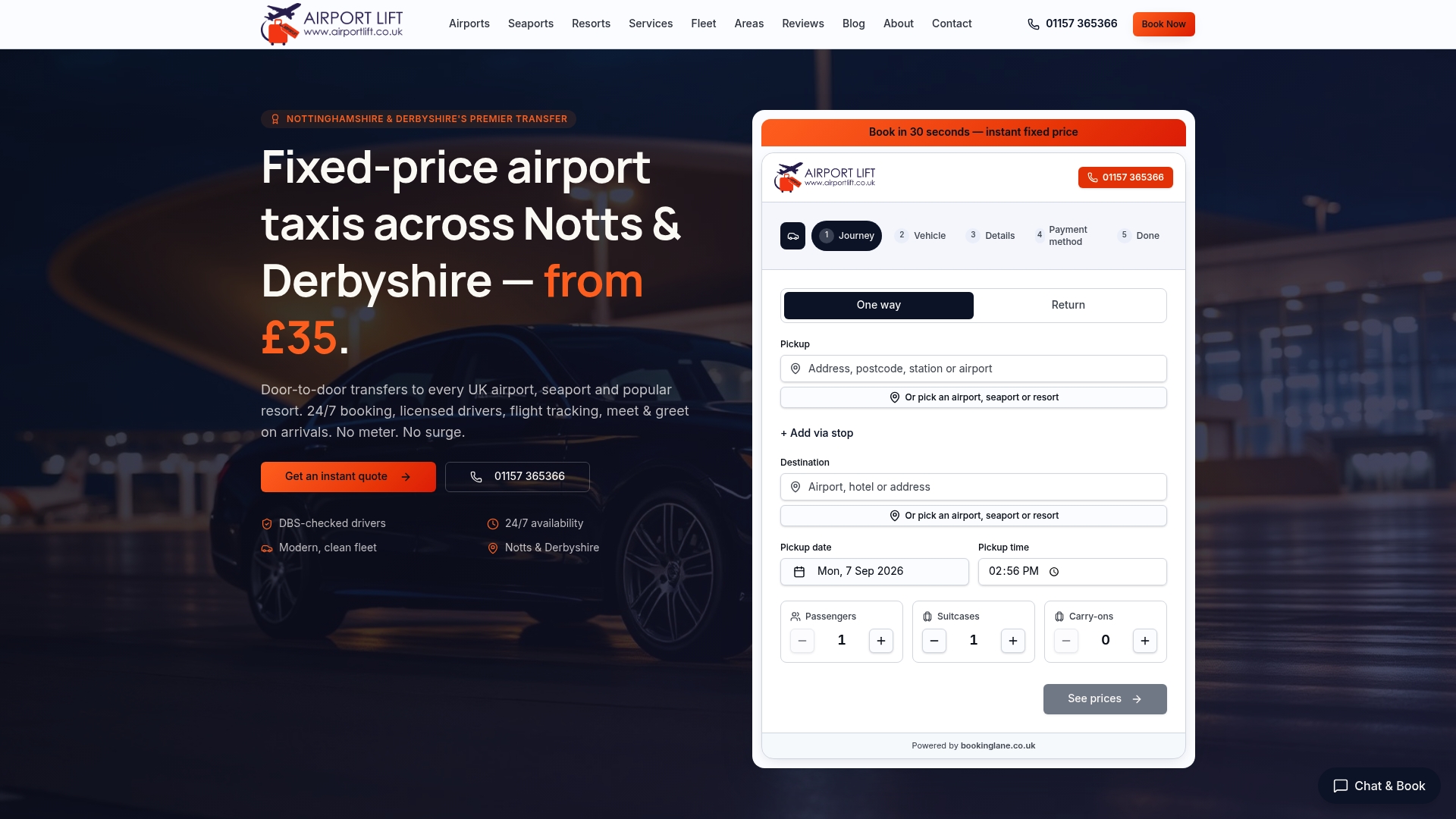
Every driver is fully licensed and DBS-checked, and flight tracking means your car adjusts to your actual landing time, not your scheduled one. Corporate accounts get monthly invoicing, useful if your finance team wants one VAT-ready statement rather than a stack of individual receipts. If you’re booking regular travel for a team, the corporate and executive services page lays out account options, and the airport transfers page covers routes and meet-and-greet extras. For a specific trip, get an instant quote and book and simply ask for a VAT invoice when you confirm.
Where to check the primary VAT rules yourself
For anyone who wants the source documents rather than a summary, these are the ones HMRC and government publish directly:
- VAT Notice 700/25, the core guidance on how VAT applies to taxis and private hire cars, including tips, waiting time, and baggage.
- Revenue and Customs Brief 8 (2025), explaining the TOMS exclusion and its 2 January 2026 effective date.
- Government response to the PHV VAT consultation, setting out the £90,000 registration threshold and the agent versus principal distinction.
- VAT Notice 744A, covering the seat-count exception for larger passenger vehicles.
This article is general information, not a substitute for advice from a qualified financial advisor. Consult a qualified financial professional about your own circumstances before acting on anything here.
Sources
- How VAT applies to taxis and private hire cars (VAT Notice 700/25)
- Revenue and Customs Brief 8 (2025): VAT Tour Operators’ Margin Scheme — supplies by private hire vehicle or taxi operators
- Government response to the consultation on VAT treatment of private hire vehicles: summary of responses
FAQ
Does Uber charge 20% VAT on UK fares?
Uber operates as principal in the UK, meaning it’s the entity making the supply to the passenger, and as a VAT-registered business it charges the standard 20% rate on the full fare. This differs from many independent drivers who remain below the £90,000 threshold and charge no VAT at all.
Can you claim VAT back on a taxi fare?
You can only reclaim VAT that was genuinely charged, and you need a proper VAT invoice showing the supplier’s VAT registration number, date, and VAT amount. A standard receipt or booking confirmation usually won’t satisfy HMRC on its own, so request the invoice at booking.
What are the new taxi VAT rules for 2026?
From 2 January 2026, private hire and taxi supplies are excluded from the Tour Operators’ Margin Scheme, except where bundled with other travel services. Standalone fares from VAT-registered operators must now carry VAT on the full amount rather than a reduced margin.
Is there VAT on all private hire and taxi fares in the UK?
No. VAT only applies when the driver or operator is VAT-registered, which typically means their taxable turnover has passed £90,000 a year. Many sole trader drivers stay below that threshold, so their fares carry no VAT.
Does Airport Lift UK provide VAT invoices for business bookings?
Yes, VAT invoices can be issued for corporate and business customers who request one at the point of booking. Fixed prices are agreed upfront, so there’s no ambiguity about what’s included before you set off, and corporate accounts can arrange monthly invoicing through the services page.