
Business Airport Transfers: 5 Checks That Cut Travel Risk

The simplest way to secure a reliable airport transfer for business travel is to prebook a fixed-price, licensed private-hire or chauffeur service that offers flight tracking, meet-and-greet and corporate invoicing. This approach protects your schedule and your budget, because punctuality, transparent pricing and supplier accountability remove the guesswork that taxis and ride-sharing apps often leave in place.
TL;DR:
- Verify the operator’s private hire license, not only the driver’s badge; London bookings require an operator license, and rules elsewhere vary by authority.
- Get waiting allowances, surcharge triggers, cancellation windows, and amendment terms in writing, because airline remedies do not determine whether your transfer waits or charges again.
- Choose a saloon for one traveler and an MPV or minibus for groups, then confirm luggage capacity and wheelchair access before booking.
- Travel managers should require documented licensing and insurance, accessible booking records, and an emergency contact available at all hours, with a clear escalation process.
Table of Contents
- Core criteria business travellers should insist on
- Booking checklist: what to check before you confirm a transfer
- Pricing and disruption: what terms to require and why they matter
- Choosing the right vehicle and organising group travel
- On the day: arrivals, meet-and-greet and dealing with issues
- Duty of care: supplier checks travel managers should mandate
- Accessibility and mobility support for business travellers
- Advantages of using airport transfers over taxis or ride-sharing services
- Tips for choosing the best airport transfer service for business needs
- How airport transfer services support efficient itinerary management
- Why this supplier model suits business travel
- Book a transfer or set up a corporate account
- FAQ
- Sources
Core criteria business travellers should insist on
Not every transfer service is built for business use. When your schedule, your meeting and sometimes your client’s first impression depend on the ride, a handful of features matter more than the rest.
A supplier that tracks your flight will adjust your pickup time automatically if you land early or late, so you are not standing at arrivals waiting for a car that has not been told your flight landed. Clear, fixed pricing agreed at the point of booking means no surprise surcharges show up on your expense report. Licensing matters too: GOV.UK guidance confirms that services providing a vehicle with a driver for hire generally fall under private-hire licensing in England, and asking for operator and driver licensing details before you book is a reasonable, straightforward check.
Here is what we’d put on a shortlist for any business transfer:
- Flight monitoring that adjusts pickup time without you needing to call anyone.
- Fixed pricing confirmed at booking, with waiting time and cancellation terms stated upfront.
- Operator and driver licensing, DBS checks, and insurance details available on request.
- Meet-and-greet at arrivals, help with luggage, and in-vehicle Wi-Fi where you need to work on the move.
- A single invoice for corporate bookings, so finance teams are not chasing receipts from five different drivers.
These are not luxuries. They are the operational basics that separate a transfer you can rely on from one you have to hope works out.
Booking checklist: what to check before you confirm a transfer
Before you commit to a supplier, whether you are booking for yourself or arranging transport for a visiting team, run through a short verification process. It takes a few minutes and saves considerably more than that if something goes wrong on the day.
- Ask for evidence of the operator’s private-hire licence, not just the driver’s badge. In London specifically, Transport for London requires anyone accepting private-hire bookings to hold an operator licence, and similar principles apply under local licensing authorities elsewhere in England.
- Confirm the supplier tracks your flight and ask exactly how amendments are handled if your flight is delayed or brought forward.
- Check vehicle capacity and luggage allowance against what you are actually carrying: a laptop bag and a carry-on is one thing, two suit carriers and a sample case is another.
- Verify driver checks, including whether DBS checks are carried out, and ask for a round-the-clock contact for emergencies or escalation you can reach if plans change mid-journey.
- For repeat or group bookings, confirm corporate account features: consolidated invoicing, a named contact for account queries, and accessible booking records for expense reporting.
Pro Tip: Save your preferred supplier’s round-the-clock contact in your phone before you travel, not after you land and discover you need it.
A supplier who answers these questions clearly, without hedging, is usually one you can trust with a repeat booking. One who cannot confirm basic licensing or checks is a risk not worth taking, whatever the quoted price looks like.
Pricing and disruption: what terms to require and why they matter
Fixed pricing agreed before you travel is the single biggest advantage a prebooked transfer has over a metered taxi or a surge-priced ride-sharing app. You know the cost when you book it, your expense claim matches what was quoted, and there is no multiplier applied because your flight landed during a rush hour or a rainstorm.
What should “reasonable” terms look like in practice:
- A waiting-time allowance that reflects real airport conditions, including baggage collection and passport control, not just the moment wheels touch down.
- Clear surcharge triggers, if any exist at all, stated in writing before you book rather than explained after the fact.
- A cancellation and amendment window generous enough to cope with a shifted meeting or a rebooked flight, particularly for corporate accounts managing multiple travellers.
It is worth understanding where airline responsibility ends and transfer responsibility begins. The UK Civil Aviation Authority explains that airline delay remedies, such as food, communications and accommodation where thresholds apply, are entirely separate from a transfer provider’s own terms. An airline looking after you during a long delay says nothing about whether your prebooked car will wait, rebook, or charge you again. Always confirm your transfer supplier’s own amendment and waiting-time policy rather than assuming airline protections cover your ground transport too.
Choosing the right vehicle and organising group travel
Matching the vehicle to the trip avoids both overpaying and arriving cramped. A standard saloon suits a solo traveller with one case. An executive saloon makes sense when you need a quieter ride, more legroom, or want to take a call en route. An MPV can suit a small group with luggage, and a minibus is a practical choice when a visiting team or conference group travels together.
For groups, booking one vehicle through one supplier has advantages beyond the obvious convenience:
- A single invoice, rather than separate receipts to reconcile against individual expense claims.
- One meet-and-greet point, so your visiting colleagues are not scattered across arrivals looking for separate drivers.
- One point of contact if plans change, rather than coordinating amendments across multiple bookings.
An executive chauffeur service earns its premium when privacy matters, such as a confidential call before a client meeting, or when the extra space and quiet genuinely let you use the journey as working time rather than dead time.
On the day: arrivals, meet-and-greet and dealing with issues
A well-run meet-and-greet service is straightforward: your driver waits at an agreed point in arrivals, usually holding a name board, and tracks your flight so they are there regardless of early or late landing.
- Check your booking confirmation for the exact meeting point before you fly, so you are not searching arrivals on landing.
- On arrival, confirm the driver’s identification and the vehicle registration match what was sent to you.
- If your flight experiences delayed baggage or you cannot locate your driver within a reasonable window, call the supplier’s 24/7 contact rather than waiting indefinitely.
- For pickups from a hotel or office reception instead of your home, confirm with reception in advance that they will direct your driver or hold any messages.
If you want to check conditions at your arrival airport before you fly, some travellers find it useful to glance at live airport webcam feeds to get a sense of weather or traffic at the terminal.
Duty of care: supplier checks travel managers should mandate
For travel managers, an airport transfer is not a minor logistics line, it is part of the travel risk your organisation carries for every employee on the road. Airmic’s duty-of-care guidance recommends approved supplier lists, booking records, emergency contacts and clear escalation procedures as part of a corporate airport-transfer policy. Treating ground transport this way, rather than as a simple purchase, brings it in line with how most organisations already manage flights and hotels.
A practical mandate for any approved transfer supplier should include:
- Proof of operator and driver licensing, plus confirmation of insurance cover.
- A documented round-the-clock emergency contact and a stated escalation process if something goes wrong.
- Booking records accessible to your travel team, supporting both expense reconciliation and incident review.
- Reporting that aligns with your existing travel-risk processes, rather than sitting in a separate system nobody checks.
Pro Tip: Keep a short, approved supplier list for all airport transfers rather than letting individual travellers book ad hoc. It is the single easiest way to demonstrate due diligence if anything ever goes wrong.
This does not need to be complicated. A supplier that can answer these points clearly, in writing, before you sign an account agreement is one worth onboarding.
Accessibility and mobility support for business travellers
Business travel does not pause for mobility needs, and a transfer service worth using should not either. If you or a colleague requires wheelchair access, extra time boarding, or help with mobility equipment, confirm this at the point of booking rather than on arrival, since not every vehicle in a standard fleet is set up for it.
Ask specifically whether the vehicle offered has suitable access and secure space for mobility equipment, and whether the driver has any relevant assistance training. Meet-and-greet arrangements are particularly useful here: a driver waiting inside the terminal, rather than at a distant pickup point, removes one of the more stressful parts of the journey for anyone with limited mobility.
For corporate travel planners, it is worth building accessibility requirements into your supplier checklist alongside licensing and insurance, so the right vehicle is confirmed in advance rather than arranged under pressure at the last minute. A supplier who asks about this proactively at booking, rather than waiting to be asked, is usually a good sign of how they handle service generally.
Advantages of using airport transfers over taxis or ride-sharing services
For business travel specifically, a prebooked transfer tends to beat a taxi rank or a ride-sharing app on the factors that actually affect your day. Price certainty is the clearest one: a fixed quote agreed before you fly means your expense claim matches what you were charged, with no surge pricing applied because your flight landed during peak demand.
Flight tracking is the second major advantage. A taxi hailed from a rank or an app has no idea your flight existed, let alone that it landed late. A prebooked transfer with flight monitoring adjusts automatically, so your car is there when you actually arrive, not when your original schedule said you would.
Accountability matters too. A licensed operator with a named driver and a vehicle registration tied to your booking gives you someone to call if anything goes wrong, a layer of reliability that an anonymous ride-sharing match does not offer in quite the same way. For a solo business trip this is convenient. For a recurring corporate travel policy, it is the difference between managing risk and simply hoping for the best each time someone flies.
Tips for choosing the best airport transfer service for business needs
Start by checking licensing and driver checks before you look at price. A cheaper quote from an unlicensed operator is not a saving, it is a risk you are choosing to carry. Our guidance on spotting licensed taxis and private hire vehicles is a useful starting point if you are unsure what to look for.
Next, confirm fixed pricing and lock it in ahead of travel. Prebooking locks in your fare before you fly, which avoids the surge pricing that app-based options can apply during busy periods.
Finally, think beyond the single journey. If you travel regularly, a supplier offering corporate accounts with consolidated invoicing saves your finance team real time compared with processing individual receipts for every trip. Ask about reporting, named account contacts, and how amendments are handled for recurring bookings before you commit to one supplier for all your travel.

How airport transfer services support efficient itinerary management
A reliable transfer does more than get you from the terminal to your destination, it protects the rest of your schedule. When pickup time adjusts automatically to your actual landing time, you are not burning a buffer hour just in case your flight is early, nor scrambling to rearrange a meeting because it was late.
For travellers juggling back-to-back commitments, a confirmed transfer at each leg of a trip, airport to hotel, hotel to meeting venue, meeting venue back to the airport, removes one of the more unpredictable variables in a business trip. Corporate account booking makes this easier still: arranging several legs through one supplier with one invoice means your itinerary planning and your expense reporting stay aligned, rather than reconciling separate bookings across different apps and receipts.
Why this supplier model suits business travel
We built our service around the checks this guide describes because business travellers do not have room for uncertainty at the kerb. Fixed pricing, licensed and DBS-checked drivers, flight tracking, meet-and-greet and corporate invoicing are not extras to us, they are the baseline. Whether it is a single executive heading to a client meeting or a visiting team arriving together for a conference, the same standards apply. If you are ready to arrange a transfer built around these checks, our services overview sets out what we offer.
— AirportLift
Book a transfer or set up a corporate account
We offer fixed prices agreed before you travel, licensed and DBS-checked drivers, flight tracking and meet-and-greet, with corporate account invoicing available for businesses booking regularly. No surprise surcharges, no guessing what the fare will be when your flight lands.
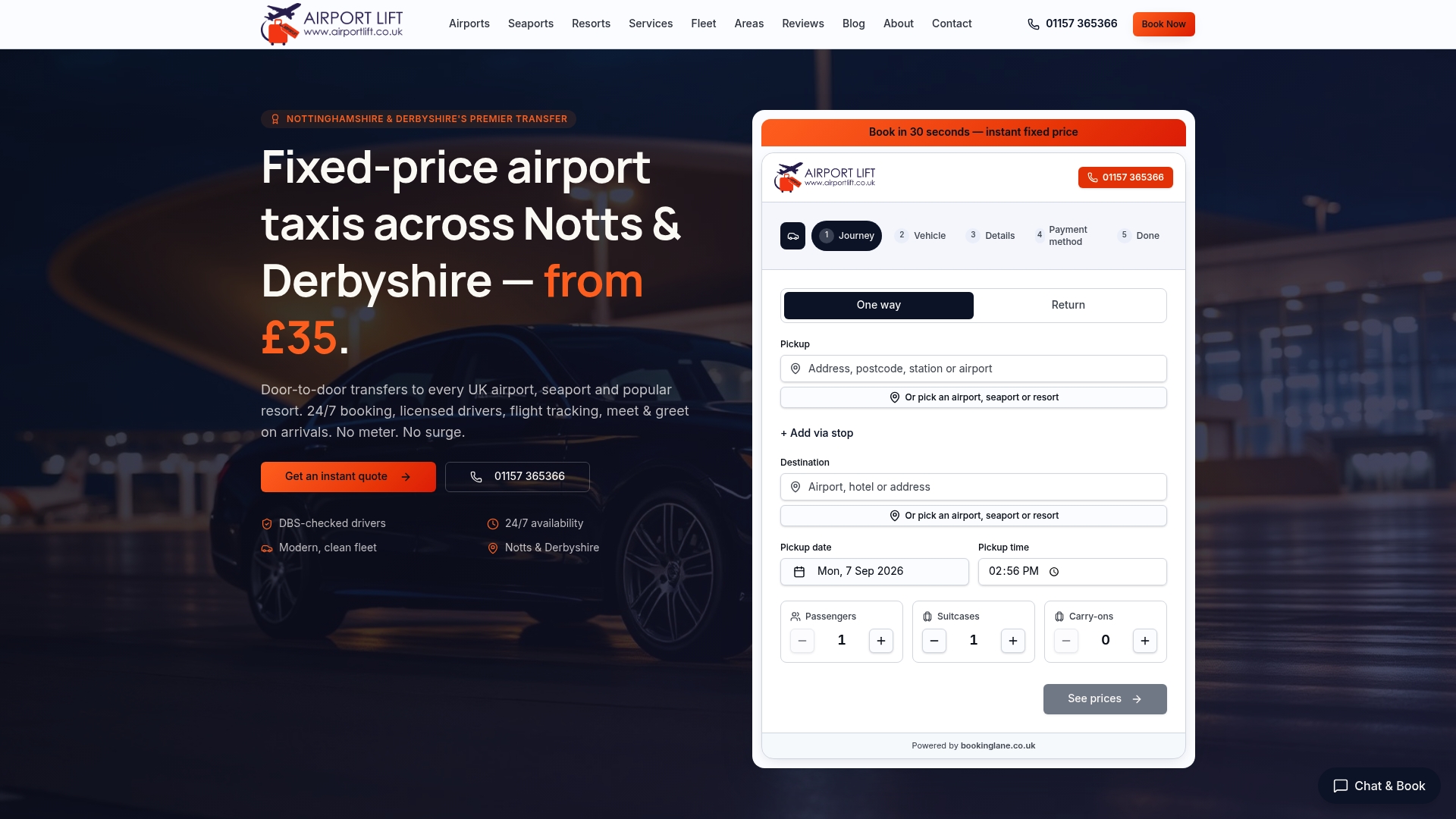
If you need a single transfer, you can get an instant quote in a couple of minutes. If you manage travel for a team, our corporate accounts page covers invoicing, reporting and how to set up central billing for your organisation.
FAQ
Are airport transfers cheaper than taxis?
A prebooked, fixed-price transfer is often more predictable than a metered taxi or ride-sharing fare, because the price is agreed before you travel rather than calculated on the day. Taxis and app-based rides can apply surge pricing during busy periods, which a fixed-price transfer avoids entirely.
Can someone act as a chauffeur at an airport?
Anyone providing a vehicle with a driver for hire at an airport generally needs to operate within private-hire licensing rules, and in London specifically must hold an operator licence. Always ask for evidence of the operator’s licence and the driver’s credentials before booking rather than assuming any driver offering a lift is licensed to do so.
How do I get a free airport transfer?
Some hotels and conference venues include a complimentary shuttle or transfer as part of a package, so it is worth checking your booking confirmation or asking the venue directly. Outside of that, airport transfers are a paid service, and a fixed-price prebooked option is usually the most predictable way to budget for one.
What is the best option for airport transfers for business travel?
For business travel, the most reliable option is a licensed, fixed-price transfer with flight tracking and meet-and-greet, since it removes the uncertainty of surge pricing and the risk of an unlicensed driver. For teams or frequent travellers, a supplier offering corporate account invoicing adds centralised billing and reporting on top of those basics.
Sources
For planners who want to check the detail behind licensing, disruption rights and duty of care, the primary sources worth reading directly are GOV.UK’s private-hire licensing guidance, Transport for London’s operator licensing rules, the Civil Aviation Authority’s delay guidance, and Airmic’s duty-of-care guidance for corporate travel risk management.