
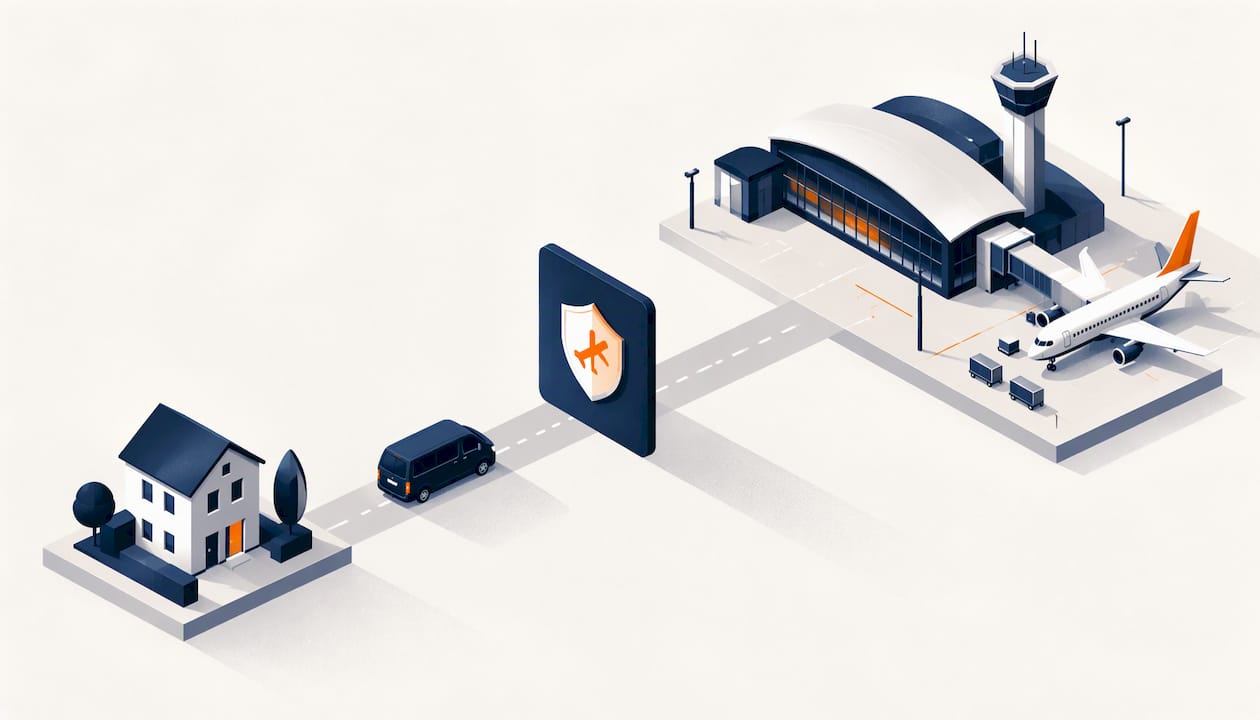
There is no separate product called airport transfer insurance. The cover you are looking for sits inside a standard UK travel insurance policy, usually under “missed departure”, and it depends on the wording of your own policy. Some policies treat a pre-booked taxi as public transport. At least one excludes a late or cancelled booked taxi altogether. So the safest route to the terminal is a pre-booked, fixed-price transfer with a sensible time buffer, backed by a policy whose wording you have read. That is how we plan every airport run from Nottinghamshire and Derbyshire at Airport Lift.
TL;DR
- Missed-departure cover in travel insurance can pay for extra travel and accommodation if your vehicle breaks down, has an accident or is caught in a road closure on the way to the airport.
- Wording differs: one major policy book excludes the delay or cancellation of a booked taxi, while others define public transport to include pre-booked taxis. Read the exact definition.
- Nearly every policy refuses a claim if you did not allow enough time to reach the airport, and most want written proof from the carrier, the breakdown service or the police.
- Your insurance protects you as a passenger. Licensing rules separately require private hire vehicles to carry motor insurance, so check that your driver is licensed.
- A fixed price, flight tracking and a booking made well ahead remove most of the risk before insurance ever comes into play.
Table of Contents
- Does travel insurance cover an airport transfer?
- What missed-departure cover pays
- The taxi exclusion to look for
- Exclusions and evidence that decide a claim
- Belongings and medical cover during the transfer
- When your cover starts and ends
- The insurance your driver must carry
- How to protect your journey before insurance matters
- Book a fixed-price transfer with Airport Lift
- Our view on insurance and transfers
- FAQ
- Sources
Does travel insurance cover an airport transfer?
In most cases, yes, as part of the journey, but not as a stand-alone benefit. Travel policies cover you “on your trip”, and the trip begins when you leave home. The transfer to the airport falls inside that window, and the benefit that usually responds is missed-departure cover.
The key is how your insurer defines public transport. AXA’s February 2025 wording defines Public Transport to include pre-booked taxis. RIAS’s June 2026 wording does the same and also covers disruption on the way to the departure point, such as strikes or adverse weather. Under wording like that, a pre-booked airport taxi sits within missed-departure cover.
Not every insurer writes it that way, which is why the next sections matter.
What missed-departure cover pays
Missed-departure cover pays the extra costs of getting to your destination, and sometimes extra accommodation, when you miss your flight, boat or train for a reason outside your control. MoneyHelper, the UK government-backed money guidance service, says a good policy offers missed-departure cover of £500 or more. It lists breakdowns, accidents and public transport delays as typical triggers.
Limits vary by policy and by tier:
- Staysure’s November 2023 wording pays up to £500 on its basic policy and £1,500 on its comprehensive and signature tiers. The trigger is arriving too late because of a breakdown of, or an accident directly involving, the vehicle you are travelling in, or a public transport failure.
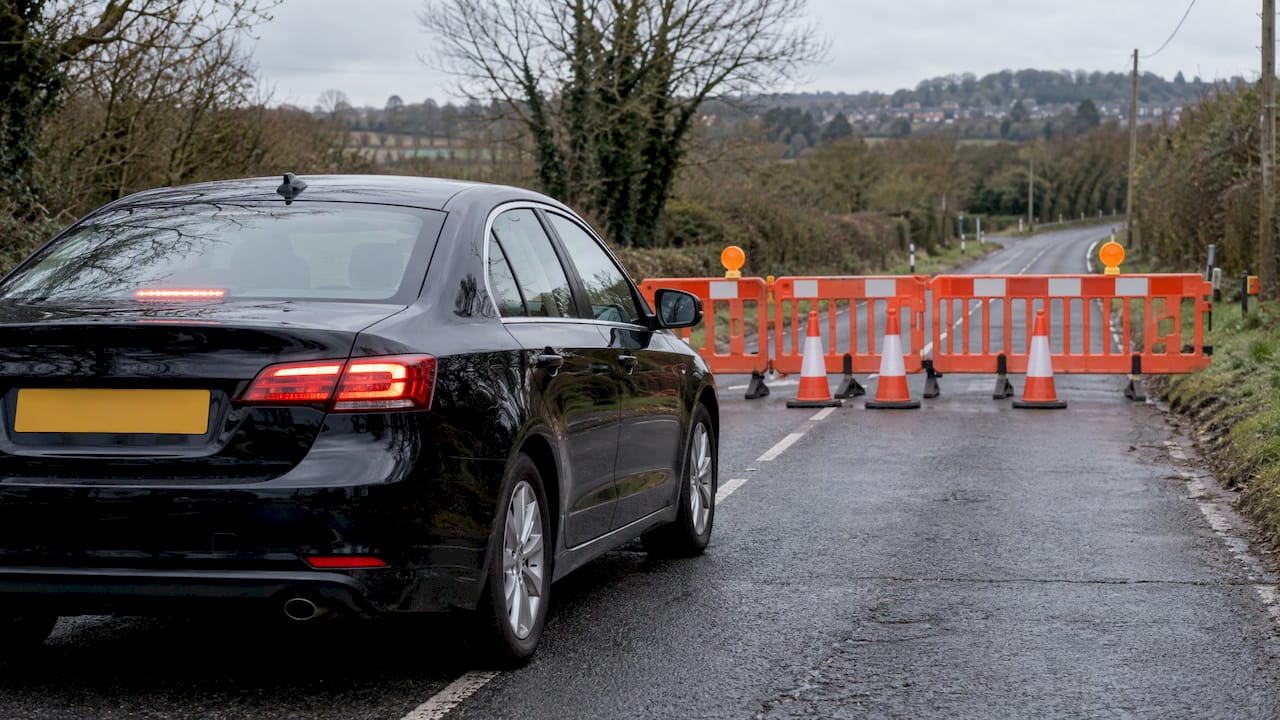
- Post Office travel insurance covers a missed departure from the UK if the vehicle you are in is in an accident, breaks down, or is delayed by traffic jams or road closures. It pays additional travel and accommodation costs up to the sum insured.
- AvantiGO’s March 2026 wording covers a vehicle that breaks down, is directly involved in an accident, or is delayed by unexpected heavy traffic or road closures.
The practical meaning: if a private transfer vehicle has an accident and you miss a flight, your own policy can respond, provided the policy wording covers that kind of vehicle and you meet its conditions.
A worked example
Say you book a taxi from Mansfield to East Midlands Airport for an early flight, and the road is closed after an accident ahead of you. You miss the departure. Under a policy like Post Office’s, delay from a road closure is a named reason. You would claim the cost of a replacement flight or onward travel and any extra night’s accommodation, up to the limit on your schedule, and send in the evidence the insurer asks for. If your policy limit is £500 and the replacement ticket costs more, you carry the difference.
The taxi exclusion to look for
This is the detail most travellers miss. Admiral’s travel policy book says it will not pay a missed-departure claim for the delayed departure or arrival of, or cancellation of, a booked motor vehicle such as a taxi. The same book does cover delay to scheduled public transport, and a private vehicle journey delayed by strike, severe weather, breakdown or an accident, but only if you still go on the trip, and not if the private vehicle lacked a valid MOT certificate.
Other wording sets different hurdles:
- esure covers missed departure only for an unavoidable delay of at least 12 hours at the departure point, and excludes claims where the carrier provides alternative transport leaving within 12 hours.
- Hays covers a local public transport delay on the way to the airport only after a minimum delay of 12 complete hours.
- Saga’s Standard and Plus policy covers failure of scheduled public transport and connecting flight delays, but excludes costs you can recover from the transport operator or your card issuer.
The lesson is not to panic. It is to search your policy document for “missed departure”, “public transport” and “taxi” before you travel, and to treat insurance as the fallback, not the plan. The plan is a transfer that arrives on time.
Exclusions and evidence that decide a claim
Most refused claims fail on the same few points.
You did not allow enough time
MoneyHelper is explicit that you won’t be covered if you haven’t allowed enough time to get to the airport. AvantiGO excludes claims where you did not allow enough time to check in. Check your airline’s recommended check-in time, add the journey time with a margin for traffic, and book the pickup for that earlier slot.
The disruption was already known
Post Office excludes claims where you knew about a strike or listed peril before buying the policy or booking the trip. MoneyHelper makes the same point for delay cover. Buy your policy when you book the holiday, not the week before.
You have no written proof
Insurers want paperwork. Post Office asks for a written note about car breakdowns or traffic delays. Avanti’s Classic and Deluxe policies pay up to £500 for a missed connection to an airport, port or terminal and want written confirmation from the carrier, or from breakdown services or the police for vehicle incidents. Keep your booking confirmation, note the time and place of any incident, and get a reference from whoever attended.
Someone else should pay first
Before claiming for a cancelled trip, Post Office says to check whether the tour operator, airline or payment provider will refund you. If the airline reroutes you, there may be nothing left to claim. Cedar Tree’s guidance notes that UK261 rights on food, accommodation and rerouting apply independently of insurance, though air traffic control problems count as extraordinary circumstances, so no cash compensation follows.
If a missed flight leaves you arriving at your accommodation late, it also helps to know how a hotel no show policy works, so you can call ahead and avoid a charge on top of your travel costs.
Belongings and medical cover during the transfer
Cover applies while you are on the trip, and that includes the taxi ride. RIAS’s June 2026 wording covers baggage, valuables and money lost, damaged or stolen on the trip, and asks for a written record where the item was in the care of a carrier. Puffin’s March 2024 wording lists a police report with crime reference number and proof of purchase for belongings, and receipts for taxi fares to or from hospital in medical claims.
Two habits protect you. Keep valuables with you rather than leaving them unattended in a vehicle, since policies commonly limit cover for items left that way. And if you leave something behind, contact the driver straight away: our guide on recovering lost property from UK taxis explains why the first hour matters.
When your cover starts and ends
On a Staysure single-trip policy, cancellation cover starts when you book or pay and ends when the trip starts. Other cover starts when you leave home, but not earlier than 24 hours before your booked departure, and ends on return home. esure’s wording follows the same pattern: cancellation cover ends when you leave home, and the rest begins as you set off.
So your journey to the airport is covered by the “on the trip” sections, and your trip home from the airport is too, up to the end of your policy period. If you buy a policy after leaving home, True Traveller’s 2026 wording notes a 48-hour waiting period before cover takes full effect, and no cancellation cover. Buy before you leave.
The insurance your driver must carry
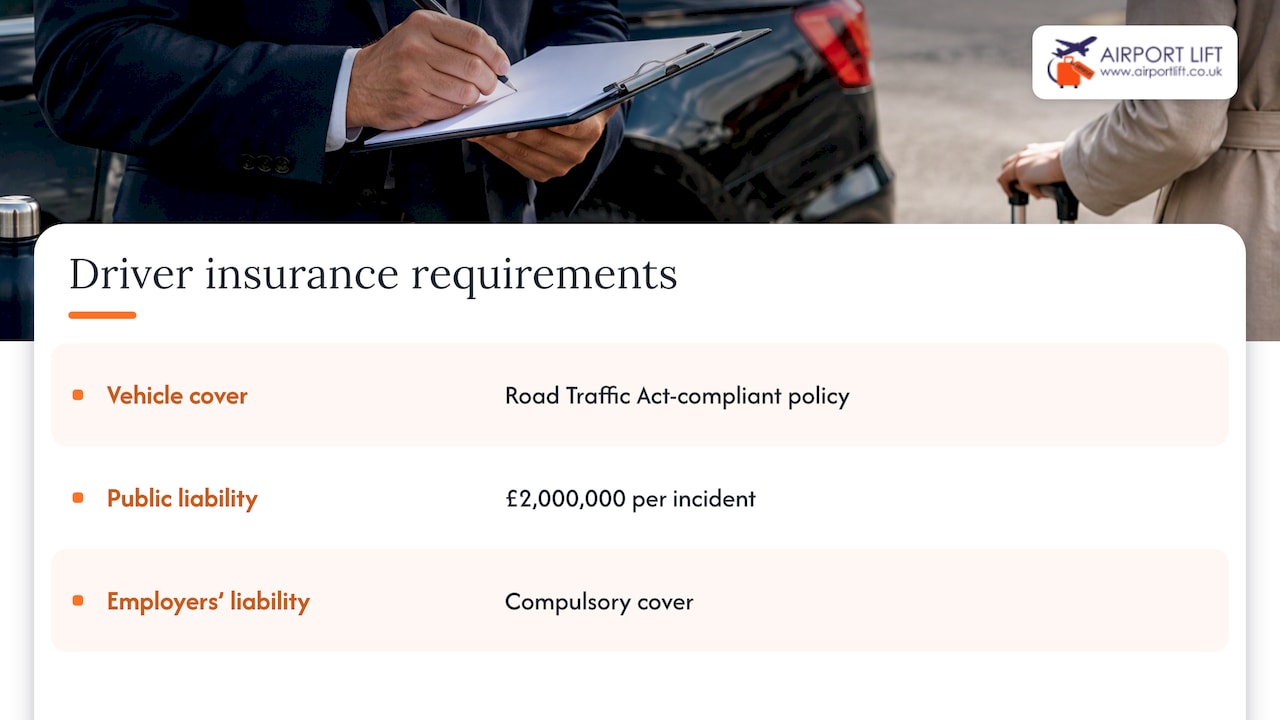
Your travel policy protects you. Separately, the vehicle needs its own cover. Under section 48 of the Local Government (Miscellaneous Provisions) Act 1976, as set out in Sheffield City Council’s private hire licensing policy, a council must not grant a private hire vehicle licence unless a policy complying with the Road Traffic Act 1988 is in force. The same policy requires operators with publicly accessible premises to hold public liability insurance of at least £2,000,000 per incident, and employers to hold compulsory employers’ liability cover.
The point for you: ride only with a licensed private hire operator. At Airport Lift our drivers are fully licensed and DBS-checked, and every journey is a pre-booked private hire transfer.
How to protect your journey before insurance matters
Insurance pays after something has gone wrong. These steps reduce the chance that anything does.
- Book ahead and lock the price. A fixed price agreed at booking means no surge pricing on the morning you travel. Our guide to prebooking an airport taxi 24 hours ahead explains the timing. Our instant quote is at airportlift.co.uk/book.
- Confirm the details. Seven things to confirm when booking a transfer covers terminal, passengers, luggage and pickup address. A booking confirmation is also the document an insurer will want to see.
- Build in a buffer. Work backwards from the airline’s check-in deadline, add the drive, then add time for traffic. This is the single condition that most often decides a claim.
- Choose flight tracking for arrivals. We track your flight, so a delayed landing does not leave you without a driver. See how flight delays and your airport taxi are handled, and what waiting time includes.
- Use 24/7 booking for awkward hours. Early departures and late returns are where a reliable pickup matters most. See our note on late-night airport taxis and making sure your driver is there on time.
- Keep a paper trail. Save the confirmation, and if anything disrupts the journey, record times and get written confirmation from whoever attended, as your insurer will ask.
A pre-booked transfer is also a different thing from joining the rank at the terminal. We compare the two in airport taxi queue vs prebook.
What a fixed price looks like
Our published one-way fixed prices from Nottinghamshire and Derbyshire include £35 to East Midlands Airport, £75 to Birmingham Airport, £100 to Manchester Airport, £70 to Leeds Bradford Airport, £120 to London Luton, £130 to London Stansted, £160 to London Heathrow and £170 to London Gatwick. For cruises, Southampton and Portsmouth are £280 each, Liverpool is £200 and Dover is £355. The price you are quoted is the price you pay, which makes it simple to compare with any excess or claim limit on your policy. The full list is on our airports page, with cruise and ferry ports and resorts listed separately.
Book a fixed-price transfer with Airport Lift
We run fixed-price transfers to all UK airports, seaports and resorts from Nottinghamshire and Derbyshire, with licensed, DBS-checked drivers, flight tracking and 24/7 booking. Families and groups can travel together in our 8-seater minibuses. Business travellers can choose executive travel, and corporate clients can be invoiced monthly. If you are arriving, meet and greet is available.
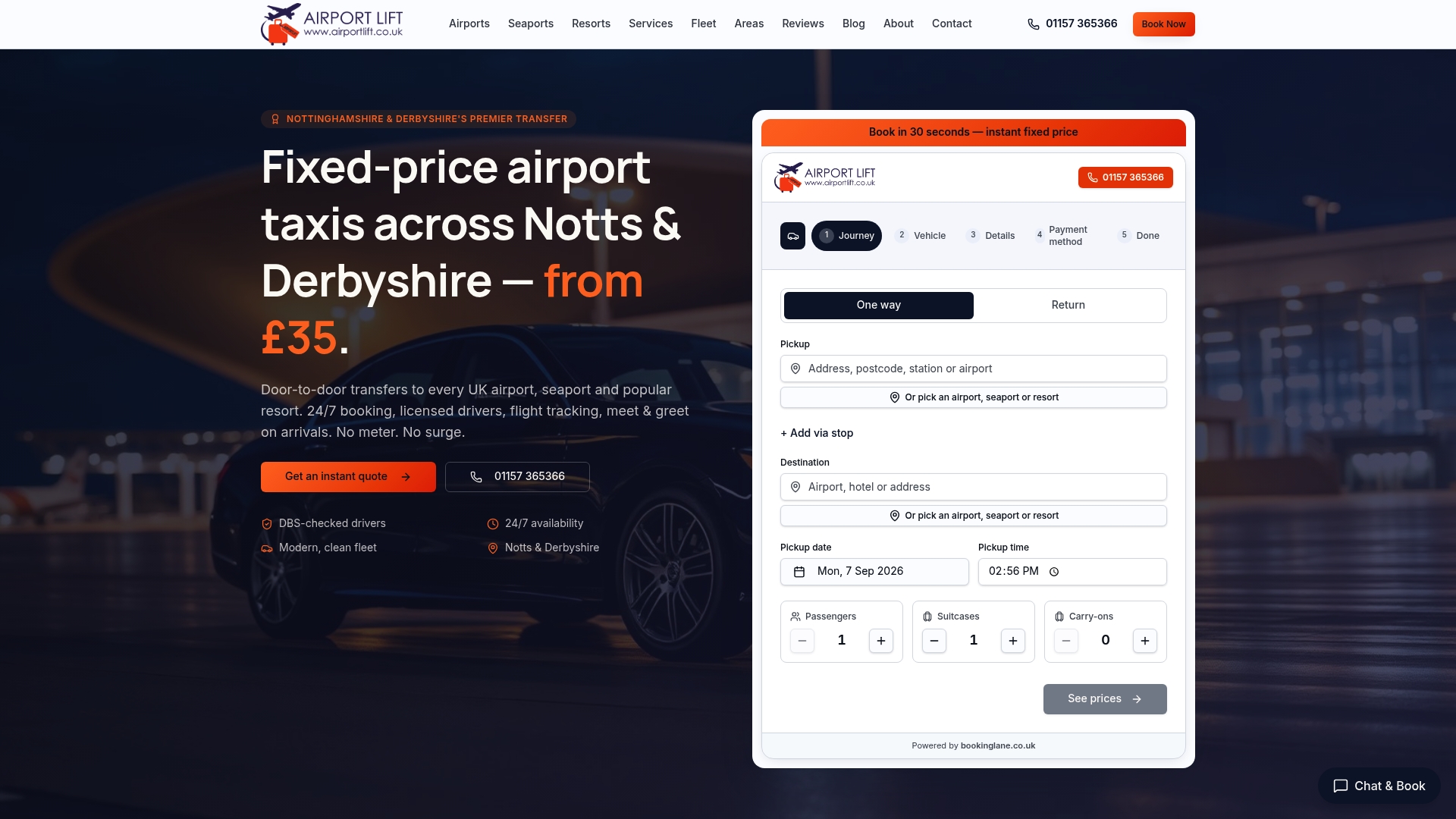
Get an instant quote and book on our booking page, or see all airport transfer services.
Our view on insurance and transfers
Insurance and a transfer do different jobs, and travellers get caught out when they treat them as one.
A policy is there for the unexpected: a closed road, a breakdown, a lost bag. A transfer is there so those things are far less likely to cost you your flight. We think the order matters. Book early, at a fixed price you know in advance, with a licensed and DBS-checked driver, and leave more time than you think you need.
Where we can help most is before the day. Flight tracking means a late landing does not become a missing driver. Meet and greet means arrivals are straightforward. Booking is open 24/7, so a 4am departure is as easy to arrange as a lunchtime one. For families and groups we offer 8-seater minibuses, and for companies we invoice monthly, which also keeps a clean record of every journey.
Read your travel policy’s missed-departure wording, buy it when you book, and keep your booking confirmation. Then let us take care of the drive.
AirportLift
FAQ
Do I need separate insurance for an airport taxi?
No. Your journey to the airport is normally covered by your standard travel insurance as part of the trip, usually through the missed-departure section. Check the wording for how it treats pre-booked taxis and what time limits apply.
How much missed-departure cover should I have?
MoneyHelper says a good policy should offer £500 or more. Some policies pay more on higher tiers, for example Staysure’s comprehensive and signature levels at up to £1,500. Compare the limit with what a replacement flight and a night’s accommodation might cost on your route.
What proof will an insurer want if my transfer is disrupted?
Expect to provide your booking confirmation and written confirmation of the cause and timing of the delay, from the carrier, the breakdown service or the police, depending on the incident. Insurers also commonly want evidence you allowed enough time. Collect it on the day, not afterwards.
Does my policy cover me on the way home from the airport?
Yes, in general. Cover for the trip usually runs until you arrive back home, within the policy period. Check the end-of-cover wording on your own policy, as some set a limit on how long after your return it applies.
Sources
- AXA Travel Insurance Policy Wording, February 2025
- RIAS Direct Travel Policy Wording, June 2026
- MoneyHelper: what a good travel insurance policy looks like
- Staysure Travel Insurance Policy, November 2023
- Post Office Travel Insurance FAQs
- AvantiGO travel insurance wording, March 2026
- Admiral Guide to your Travel
- esure Travel Insurance Policy Wording, May 2025
- Hays Gold and Silver Travel Insurance Policy, October 2025
- Saga Standard and Plus travel policy, October 2025
- Avanti Travel Insurance policy document
- Cedar Tree: flight disruption and air traffic control issues
- Hotel no show policy guide
- Puffin Travel Insurance Policy Wording, March 2024
- Staysure Travel Insurance policy, October 2025
- True Traveller Insurance Policy 2026 UK
- Sheffield City Council Private Hire Operator and Vehicle Licence Policy